


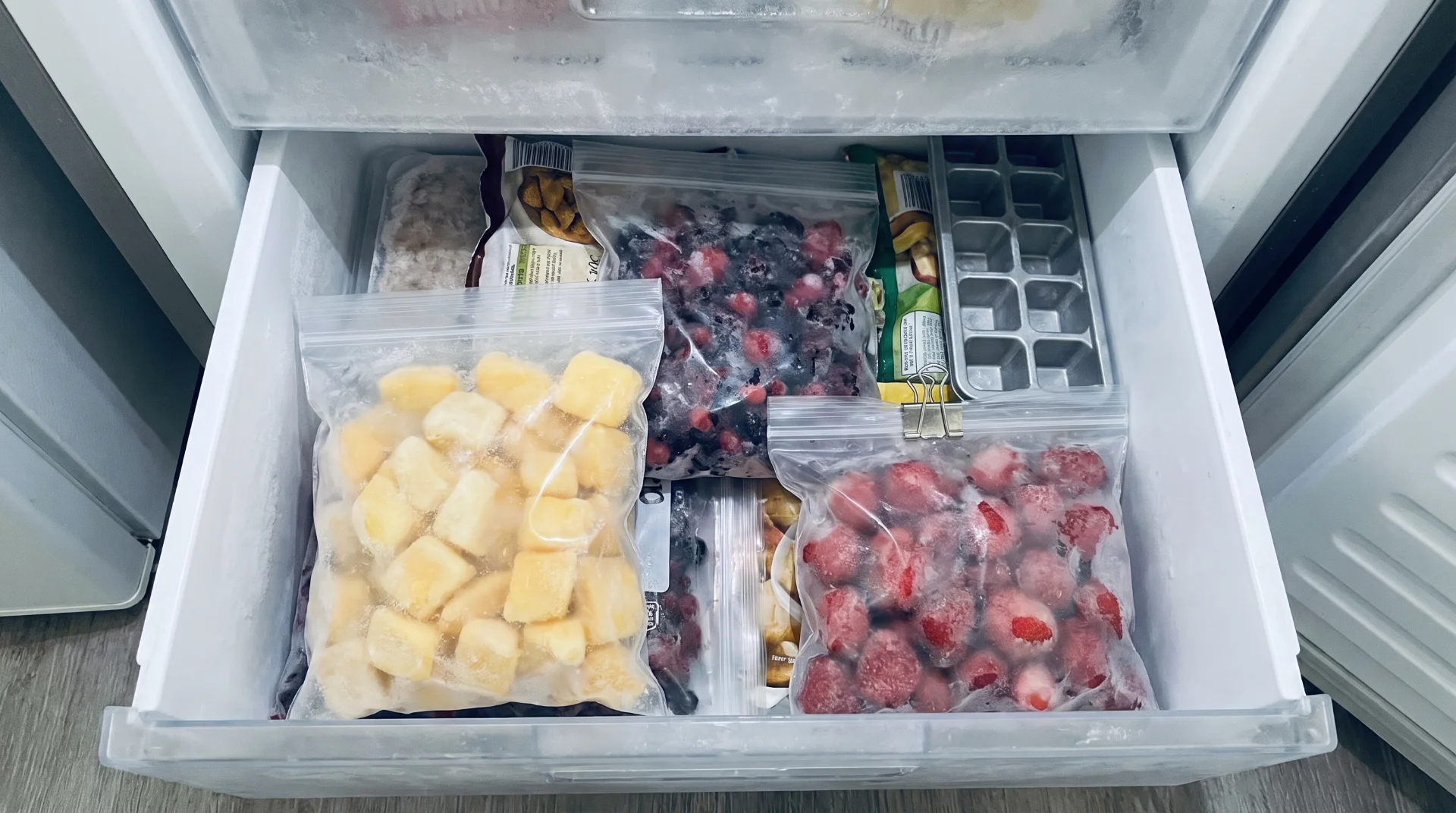
You find a bag of frozen mango at the back of the freezer. There's frost inside the bag, a few pieces look pale, and you can't remember when you bought it.
Is it still good?
Here's the short answer: frozen fruit kept at 0°F doesn't go bad in the food safety sense, but it does lose quality over time. The trick is knowing the difference, and knowing how to store, thaw and refreeze it so you get the most out of every bag.
In this guide, you'll see how long frozen fruit lasts according to USDA guidance, the signs that a bag is past its best, whether freezer-burned fruit is safe, and the right way to thaw and refreeze it.
Let's dive right in.
Table of Contents
- Does Frozen Fruit Go Bad? The Short Answer
- How Long Does Frozen Fruit Last?
- What the "Best By" Date Really Means
- 5 Signs Your Frozen Fruit Is Past Its Best
- Is Freezer-Burned Fruit Safe to Eat?
- How to Thaw Frozen Fruit (3 Safe Ways)
- Can You Refreeze Thawed Fruit?
- How to Store Frozen Fruit So It Lasts
- For Foodservice: Storing Frozen Fruit at Scale
- FAQ
Does Frozen Fruit Go Bad? The Short Answer
Not if it stays frozen. According to the USDA Food Safety and Inspection Service, food stored constantly at 0°F or below stays safe indefinitely (USDA FSIS). At that temperature, bacteria, yeasts and molds go dormant and can't grow.
What does change is quality. Over many months, frozen fruit slowly loses moisture, color and flavor. So the real question isn't "is it safe?" but "is it still good?"
One catch: freezing pauses microbes, it doesn't kill them. The FDA notes that freezing stops most bacteria from growing, but doesn't destroy them. Once fruit thaws and warms up, they can become active again. That's why how you thaw matters as much as how long you store.
How Long Does Frozen Fruit Last?
For best quality, use frozen fruit within 8 to 12 months when it's stored at 0°F, according to the National Center for Home Food Preservation (NCHFP). After that, it should still be safe, just lower in quality.
| Where it's kept | How long | What to know |
|---|---|---|
| Freezer at 0°F (−18°C) | 8 to 12 months for best quality | Safe indefinitely while it stays frozen. Flavor and texture fade slowly after a year. |
| Fridge freezer compartment | Shorter | If it can't hold 0°F or the door opens often, USDA advises using it for short-term storage only. |
| Thawed, in the fridge | Use soon | Treat it like fresh fruit. Thaw only what you need. |
| On the counter | Not recommended | The outside of the fruit warms into the "danger zone" (40 to 140°F) while the middle is still frozen. |
Sources: NCHFP, USDA FSIS.
Two things decide where in that 8 to 12 month range your fruit lands: how cold and steady your freezer is, and how well the bag is sealed. More on both below.
What the "Best By" Date Really Means
Most bags of frozen fruit carry a "Best By" or "Best if Used By" date, not an expiration date. According to the USDA, these dates describe when a product is at its best flavor and quality. They aren't safety dates (USDA FSIS).
So a bag that's a few weeks past its date isn't automatically garbage. If it's been kept frozen the whole time and passes the checks below, it's fine to use. It may just taste a little less bright than a newer bag.
5 Signs Your Frozen Fruit Is Past Its Best
Before you toss a bag, or blend it, look for these:
1. Lots of frost or ice inside the bag
A little frost is normal. A thick layer of ice crystals means moisture has been pulled out of the fruit, usually because the freezer temperature has been going up and down. The fruit underneath will be drier and blander.
2. Pieces frozen into one solid block
IQF (individually quick frozen) fruit should pour freely, piece by piece. If the bag has turned into a brick, the fruit has likely thawed partway and refrozen at some point. It may still be safe, but expect a softer, mushier texture.
3. Dry, pale or leathery spots
That's freezer burn. It isn't a safety problem (see below), but those spots will taste flat.
4. An off smell, mold or slime after thawing
This is the one that matters for safety. If thawed fruit smells sour or fermented, looks moldy, or feels slimy, throw it out. When in doubt, throw it out.
5. It's been in the freezer well over a year
Old fruit isn't dangerous if it's stayed frozen, but it's often lost most of its flavor. Use it where flavor matters less, like a baked crumble or a sauce, rather than a fruit bowl.
Is Freezer-Burned Fruit Safe to Eat?
Yes. According to USDA FSIS, freezer burn doesn't make food unsafe. It just makes it dry in spots.
Freezer burn happens when air reaches the surface of frozen food and pulls moisture out of it. On fruit, it shows up as dull, pale or leathery patches, often with ice crystals around them.
Your options:
- Light freezer burn: use the fruit in smoothies, sauces or baking, where texture matters less.
- Heavy freezer burn: it's safe, but the flavor is mostly gone. Most people toss it for quality reasons.
Prevention tip
Air is the cause, so air is the fix. Press as much air as you can out of an opened bag before you reseal it. If the bag tears, USDA says the food is still safe; just overwrap it or move it to a freezer bag.
How to Thaw Frozen Fruit (3 Safe Ways)
First, ask whether you need to thaw at all. For smoothies, bowls, sorbets and most baking, frozen fruit works best straight from the freezer.
When you do need to thaw, the NCHFP recommends three safe methods, and one to avoid:
| Method | How long | Best for |
|---|---|---|
| In the fridge | Several hours to overnight. A 1 lb package can take 6 to 8 hours or more. | Toppings, fruit salads, anything you'll eat as is. Gentlest on texture. |
| Under cold running water | About 30 minutes to 1 hour for a 1 lb package | When you need it faster. Keep the fruit in a sealed, leak-proof bag and the water below 70°F. |
| In the microwave | A few minutes on defrost | Only if you're using it right away. Microwaves heat unevenly. |
| On the counter | Avoid | The outside sits in the danger zone while the middle thaws. |
Source: NCHFP, Thawing and Preparing Foods for Serving.
Three tips for better results:
- Serve it with a few ice crystals left. The NCHFP suggests this for fruit eaten on its own, because it hides some of the soft texture that fully thawed fruit has.
- Thaw only what you need. Scoop out a portion and put the bag straight back in the freezer.
- Keep the juice. Thawed fruit releases more juice than fresh. In baking, use only part of it or add a little extra thickener, as the NCHFP recommends.
Can You Refreeze Thawed Fruit?
Sometimes. It depends on how it was thawed:
- Thawed in the fridge: yes. USDA FSIS says food thawed in the refrigerator is safe to refreeze without cooking. Expect some loss of quality from the moisture lost during thawing.
- Thawed in cold water or the microwave: cook it first, then refreeze.
- Still has ice crystals, or still at 40°F or below: it can usually go back in the freezer, for example after a short power outage.
- Left at room temperature for more than 2 hours: don't refreeze it.
Here's the honest catch: refreezing is about safety, not quality. Every thaw and refreeze cycle makes fruit softer and wetter. If you have leftover thawed fruit, the NCHFP notes it keeps better cooked. Turn it into a quick compote or sauce, or bake it into something from our recipes.
How to Store Frozen Fruit So It Lasts
A few small habits keep frozen fruit at its best for the full 8 to 12 months.
Step #1: Keep the freezer at 0°F or colder
Both USDA and the FDA recommend 0°F (−18°C). An inexpensive appliance thermometer tells you if your freezer is actually holding it.
Step #2: Seal out the air
Press the air out of opened bags and reseal them tightly, or move the fruit to a freezer bag or airtight container.
Step #3: Keep it away from the door
The door is the warmest, least stable spot in the freezer. Temperature swings are what cause frost inside the bag and pieces that clump together.
Step #4: Scoop fast and put it back
Don't let the bag sit on the counter while you make your smoothie. A few minutes of softening, repeated every morning, adds up.
Step #5: First in, first out
Write the date on bags when they go in and use the oldest first. It's the simplest way to never find a forgotten bag again.
For Foodservice: Storing Frozen Fruit at Scale
In a smoothie bar, bakery or production kitchen, the same rules apply, but small mistakes cost more because they happen across whole cases.
- Check fruit on arrival. Free-flowing pieces are a good sign. Heavy frost inside the liner or clumped blocks can point to a temperature problem somewhere in transit, so flag it with your supplier.
- Get it into the freezer fast. Cases left on a receiving dock are exactly where thaw and refreeze cycles start.
- Rotate by date. Label cases on arrival and run first in, first out across your walk-in.
- Portion from frozen. For blended drinks and bowls, pre-portioning frozen fruit keeps texture and fill weights consistent and avoids thawed waste.
- Thaw under refrigeration. When a recipe needs thawed fruit, plan ahead and thaw in the walk-in, not on the prep line.
The work starts long before your freezer, too. Fruit that's frozen and packed next to the field has fewer handoffs where temperature can slip. Read more about why that matters in our guide to packing at source, or see how each cut behaves in frozen fruit formats explained.
FAQ
Does frozen fruit expire?
Not in the safety sense, as long as it stays frozen at 0°F. The date on the bag is a quality date. After it passes, the fruit is usually still safe but may have less flavor and a softer texture.
Can you eat frozen fruit that's 2 years old?
If it's been kept frozen the whole time, it should be safe. But it's well past the 8 to 12 months recommended for best quality, so check for freezer burn and flavor before using it, and lean toward cooked uses.
Can you eat frozen fruit without thawing it?
Yes. Frozen fruit is ready to use in smoothies, bowls, sorbets and baking straight from the freezer. Many baked recipes actually work better with fruit that goes in frozen, like the ones in our holiday bakes with frozen berries.
Do you need to wash frozen fruit?
Commercial frozen fruit is typically washed and sorted before it's frozen, so it's ready to use. Rinsing frozen fruit under the tap mostly just adds water and makes it mushy. If you want an extra safety step, cook it: heat is what kills microbes, rinsing doesn't.
Why does thawed fruit get mushy?
Water inside the fruit turns to ice crystals, and those crystals break the fruit's cell walls. Fast freezing makes smaller crystals and less damage, which is one reason IQF fruit holds its shape better than fruit frozen slowly at home. For more on how frozen compares to fresh, read fresh vs. frozen fruit.
The Bottom Line
Frozen fruit doesn't go bad as long as it stays frozen, but it does slowly lose quality. Keep your freezer at 0°F, seal out the air, use bags within 8 to 12 months, and thaw in the fridge (or not at all). Do that, and every bag tastes close to the day it was frozen.
Need frozen fruit that arrives free-flowing and stays that way? Patagonia Foods freezes and packs fruit close to where it's grown. Request a quote and our team will help you find the right fruit and format for your kitchen or production line.

