


When you buy frozen fruit, the spec sheet tells you the variety, the format and the grade.
What it usually doesn't tell you is where the fruit was packed, or how many hands it passed through between the field and your receiving dock. That one detail shapes quality, traceability and consistency more than most buyers realize.
In this guide, you'll see what "pack at source" means, how it compares to freezing in bulk and repacking later, and how Patagonia Foods puts it into practice across Mexico, Central and South America and Vietnam. You'll also get a short list of questions to ask any frozen fruit supplier.
Let's dive right in.
What "Pack at Source" Actually Means
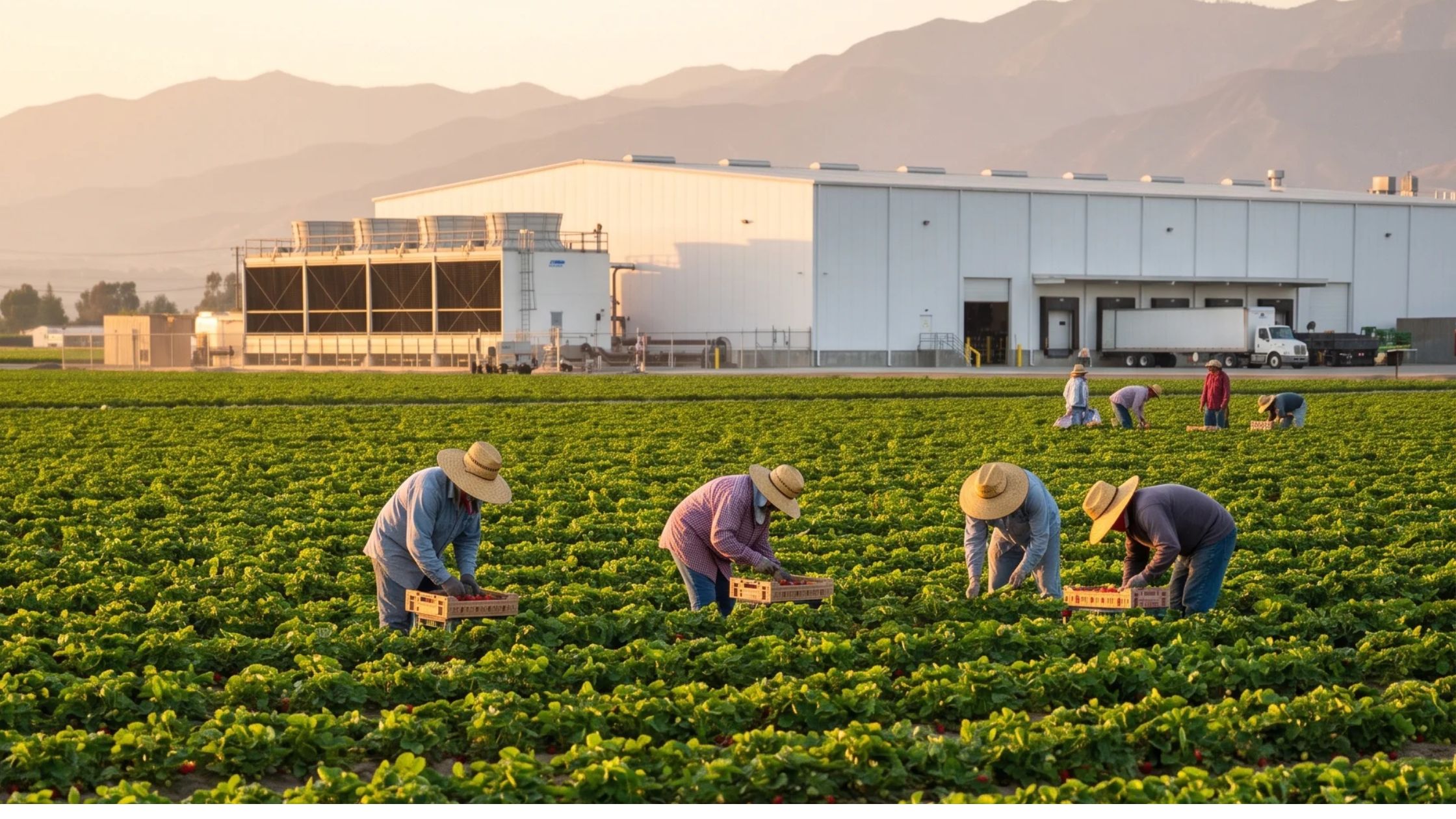
Pack at source means the fruit is frozen and packed into its finished format right where it is grown. The bag or case that leaves the plant is the same one that arrives at your facility.
At Patagonia Foods, that is the thread that runs through everything we do. We pack directly where the fruit is grown, which gives us direct visibility and control from harvest through finished product.
In practice, that means:
- Fruit moves from the field to a nearby plant for sorting, freezing and packing. With IQF (individually quick frozen) fruit, each piece is frozen separately, so it stays loose in the bag instead of setting into a block.
- Finished packs are made on site for club, retail and foodservice customers.
- Our own QA (quality assurance) team is present in the field and in the plant whenever Patagonia Foods product is produced.

Pack at Source vs. Repack Later: Side by Side
IQF fruit is almost always frozen close to where it is grown, because fresh fruit doesn't travel well. The real difference between supply chains is what happens after freezing.
In one common model, fruit is frozen at origin in bulk, shipped, then repacked into retail or club packaging by a separate co-packer (a contract packing company). In the pack-at-source model, the finished pack is made at origin, under the same QA program as the freezing.
| Factor | Pack at source | Freeze in bulk, repack later |
|---|---|---|
| Where finished packs are made | At origin, next to the growing region | At a separate repacking facility |
| Handling steps after freezing | Fewer: frozen and packed in one place | More: bulk packing, transfer, then repacking |
| Quality oversight | One QA program from field to finished pack | Split across the freezer and the repacker |
| Traceability | Traced from field to finished pack by one team | Depends on records passed between companies |
| Where it fits | Club, retail and foodservice packs | Common for bulk ingredient supply |
Bottom line: every extra stop adds time, handling and cost. Packing at the source removes touches and keeps one team accountable from the field to the finished pack.
Why the Hours After Harvest Matter
Quality is decided at the source. Once fruit is picked, it starts to soften, lose moisture and break down. The faster it is sorted and frozen, the more of its color, flavor and texture you keep in the bag.
That is why location matters. A plant close to the growers can receive fruit soon after harvest, sort out defects while the fruit is fresh, and freeze it before quality slips.

Buyer Tip
Ask your supplier how far the packing plant is from the fields, and how fruit is handled between harvest and the freezer. The answer tells you a lot about what will arrive at your dock.
Facilities Built for Consistency at Scale
Packing at the source only works if the plants at the source are built to a high standard. That is why we have made strategic investments in GFSI-level facilities, packaging capabilities and production capacity.
GFSI is the Global Food Safety Initiative, the industry body that benchmarks food safety certification programs such as SQF, BRCGS and FSSC 22000. You can see the standards we work under on our certifications page.
We pack for club, retail and foodservice in modern facilities we helped design for efficient processing and flexible packaging at scale, all under our QA oversight. A few milestones along the way:
| Year | Milestone |
|---|---|
| 2004 | Patagonia Foods founded |
| 2007 | Established our team in Mexico |
| 2012 | Opened our Mexico office, Patagonia Foods AgroExport |
| 2019 | Investment and expansion in Baja |
| 2021 | Joint venture with the largest strawberry grower-processor in Mexico |
| 2023 | Value-add production investment in Boise |
| 2024 | Established our team in Peru |
| 2026 | Opening our office in Vietnam |

Eyes on Every Step: QA From Field to Finished Pack
A packing plant next to the fields is only half of the story. The other half is who is watching the product.
Our QA team is in the field and in the plant whenever our product is produced. Food safety systems and supplier standards protect quality from source to delivery. Here is what that looks like:
- The largest team of QA and food safety inspectors in Mexico
- Real-time QA reporting to hold the highest standards
- Traceability from our fields to the end user
- Annual plant audits, field inspections and food safety classes
- The same QA and inspection process in Peru and Vietnam as in Mexico
More detail on how we inspect, document and trace product is on our Quality and Food Safety page.

Buyer Tip
Put traceability to the test. Pick a lot number from a recent delivery and ask the supplier to show you the field, the harvest date and the pack date behind it.
More Regions, Fewer Gaps
One growing region can only supply fruit for part of the year. Sourcing and packing across multiple regions gives us flexibility across crops and seasons, and limits supply disruptions.
We took the model we built in Mexico to new regions, with the same pack-at-source approach and the same QA standards:
| Region | Key fruits |
|---|---|
| Mexico (Baja and mainland) | Strawberries (including organic), raspberries, blackberries, blueberries, mango, avocado, papaya, bananas |
| Central America | Bananas, pineapple |
| Colombia and Ecuador | Bananas, plantains, pineapple, avocado, papaya |
| Peru | Mango, blueberries, strawberries, avocado, pineapple, grapes, açaí, ginger, turmeric |
| Brazil | Açaí |
| Chile | Strawberries, raspberries, blackberries, blueberries, cherries, peaches, grapes |
| Vietnam | Mango, dragon fruit, papaya, coconut, watermelon, ginger, turmeric |
The model is working. We are a top 3 exporter of frozen fruit from Mexico.
In Peru, we scaled export volume 20x in three years, from 20 to more than 400 containers. In Vietnam, we have grown from 10 loads a year in 2020 to about 200 containers today.

Harvest windows still vary by fruit and origin. But because growing seasons in the northern and southern hemispheres complement each other, core items can ship year-round.
6 Questions to Ask Any Frozen Fruit Supplier
Whether you work with us or not, these questions will help you understand what is really behind a quote:
- Where is the fruit frozen, and where is the finished pack made? Same place, or two different facilities?
- How close is the plant to the growers?
- What certifications do the plants hold? Look for GFSI-benchmarked schemes such as SQF, BRCGS or FSSC 22000.
- Who runs QA, and are they on site during production?
- Can you trace a lot back to the field? Ask for an example.
- What happens when one region has a short crop? Ask which other regions can cover the gap.
If you are still deciding which cut fits your line, our guide to frozen fruit formats walks through whole, diced, sliced and puree options. Sourcing organic? Our organic vs. conventional frozen fruit guide covers the extra paperwork.
The Bottom Line
Where your frozen fruit is packed is not a small detail. Packing at the source means fewer touches, one QA program from field to finished pack, and clear traceability on every lot.
Packed at the source, delivered to you. Request wholesale pricing or talk to our team about IQF fruit packed where it is grown, in the formats your business needs.

