


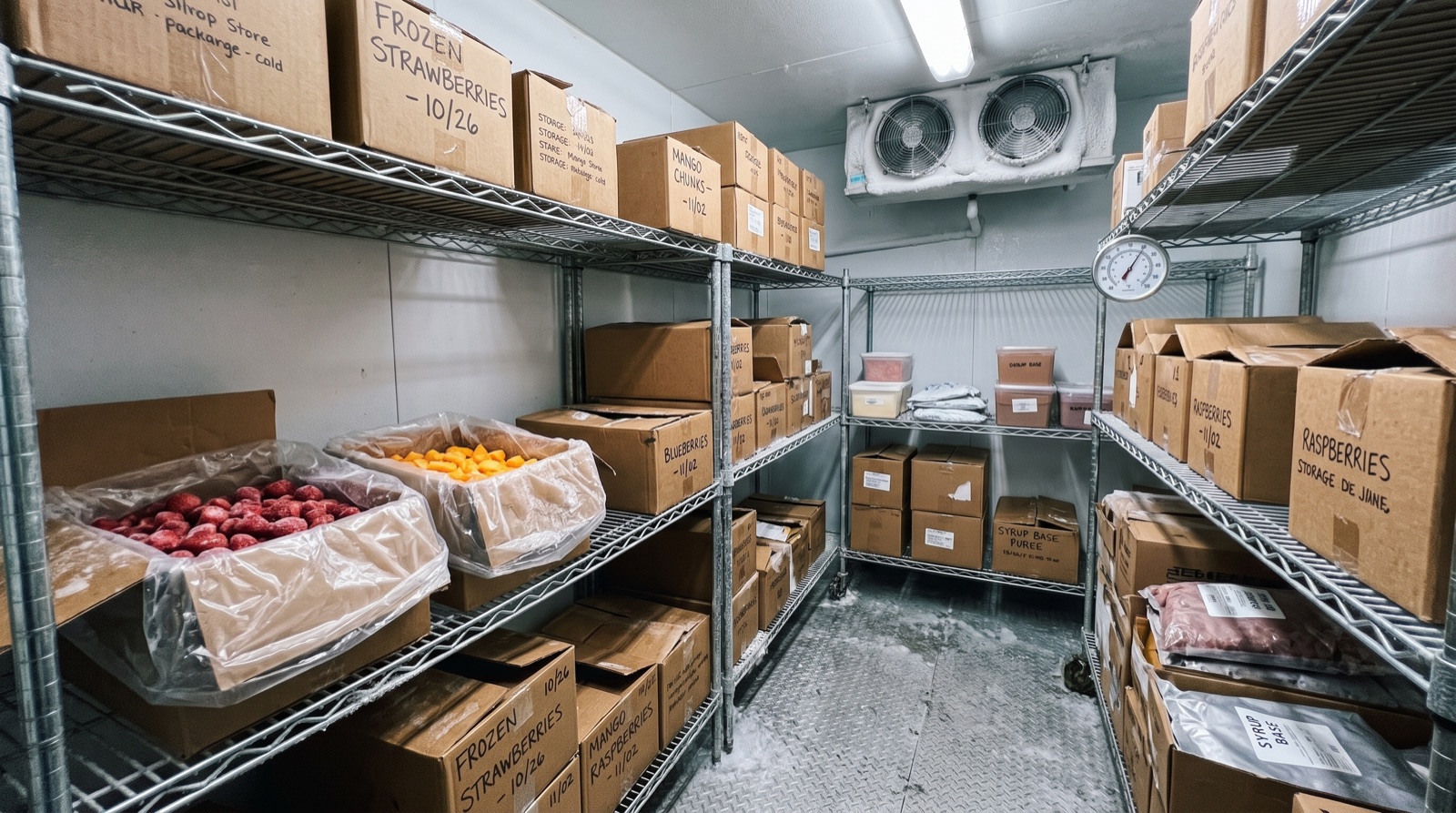
Frozen fruit is about as forgiving as an ingredient gets. It doesn't bruise, it doesn't ripen past use, and it holds for months.
But it has one weakness: temperature swings. A case that sits on the dock for 40 minutes, a walk-in door that keeps getting propped open, a bag that gets thawed and refrozen. None of those make the fruit unsafe on their own, but they all show up in the bowl, the smoothie or the finished product as clumps, ice, mushy pieces and dull color.
We ship frozen fruit to smoothie shops, bakeries, beverage brands and manufacturers, and most quality complaints we help troubleshoot start in storage, not in the field.
In this guide, you'll see how to receive, store, rotate, portion and thaw frozen fruit in a commercial kitchen or plant, with the temperatures and rules that health inspectors and auditors look for.
Looking for home freezer tips instead? Read does frozen fruit go bad.
Table of Contents
- The one number that matters: 0°F
- Receiving frozen fruit
- Setting up the walk-in or freezer
- Labeling and rotation
- Handling opened cases and bags
- Thawing for production
- When the freezer fails
- Daily and weekly checklist
- FAQ
The one number that matters: 0°F
Store frozen fruit at 0°F (-18°C) or colder. That's the temperature USDA and the FDA recommend for frozen food, and it's the standard frozen fruit is packed and shipped at.
At 0°F, bacteria, yeasts and molds can't grow, so the fruit stays safe as long as it stays frozen. What you're protecting from there on is quality. And the biggest enemy of quality isn't time, it's fluctuation.
Every time the temperature rises a few degrees and drops back, tiny ice crystals inside the fruit melt and refreeze into bigger ones. Moisture moves from the fruit to the inside of the bag. That's where the frost, the clumping and the soft texture come from.
So the goal is a freezer that's cold and steady. A freezer that holds -5°F all day is better than one that swings between -10°F and 15°F.
Quick tip
Don't trust the display on the unit alone. Keep a separate thermometer inside the freezer, away from the door, and check it against the display once a week.
Receiving frozen fruit
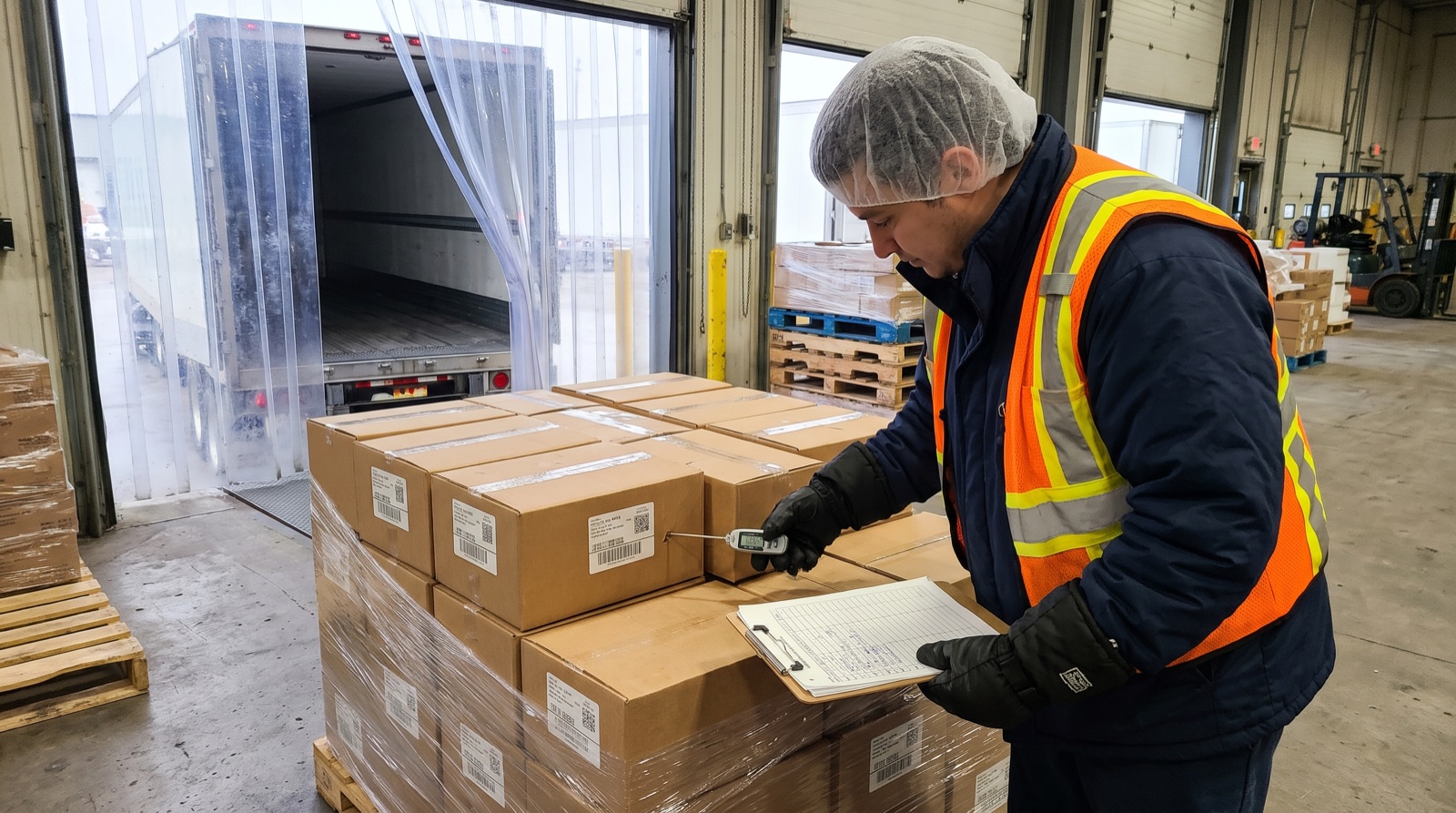
Receiving is where most temperature damage happens, and it's the step that gets rushed the most.
The FDA Food Code expects food that's shipped frozen to arrive frozen. When a delivery comes in:
- Check the truck first. Look at the reefer temperature before the doors open, and ask for the temperature record if something looks off.
- Probe a case. Slide a thermometer between two bags or into the center of a case. You want it at or near 0°F.
- Feel the fruit. IQF fruit should rattle loose inside the bag. Pieces frozen into a block, or heavy frost inside the liner, can mean the load warmed up somewhere along the way.
- Look at the cases. Wet, crushed or stained cartons are a warning sign.
- Match the paperwork. Check lot numbers against the packing list and keep the COA on file.
- Get it in the freezer fast. Frozen goods go away first, before dry goods or anything else on the truck.
If a load fails your checks, write down what you saw, take photos and call your supplier before you put it into stock. A good supplier will want to know, and it's much harder to sort out once the cases are mixed into your inventory.
Setting up the walk-in or freezer
How you load a freezer matters almost as much as how cold it is.
- Keep cases off the floor. The Food Code requires food to be stored at least 6 inches above the floor. Use shelving or pallets, never cardboard on concrete.
- Leave room for air. Cold air has to move around the cases. Don't stack product against the walls or right up to the evaporator fans, and leave a few inches between stacks.
- Keep fruit away from the door. The area near the door is the warmest spot and sees the most swings. Put your slowest moving stock in the back and your daily use stock where staff can grab it quickly.
- Store fruit above raw meat and seafood. Frozen fruit often goes into smoothies and toppings without cooking, so it belongs on the upper shelves.
- Don't overload it. Freezers are built to hold frozen product cold, not to freeze large amounts of warm food. If you're freezing prepped food in the same unit, do it in small batches so it doesn't warm up the fruit next to it.
- Protect the door. Strip curtains, a door closer and a rule against propping the door open during deliveries make a real difference.
Labeling and rotation
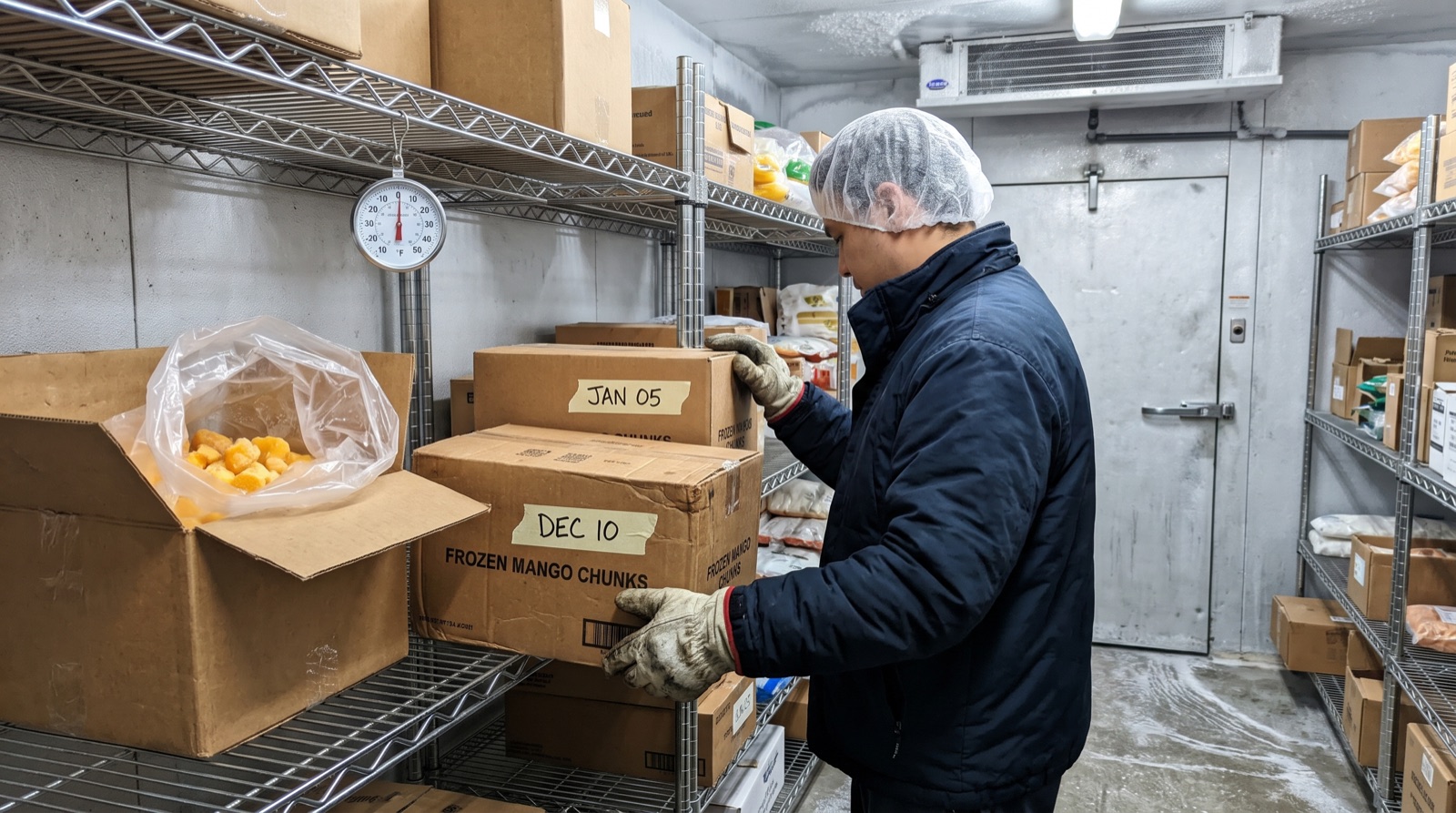
Frozen fruit lasts a long time, which is exactly why old stock gets forgotten in the back of a walk-in.
- Date every case on arrival. A marker on the end of the case that faces out is enough.
- First in, first out. New deliveries go behind or under older stock, never in front.
- Know your shelf life. It varies by fruit, format and supplier. Check the spec sheet for each product and the best by date on the case. Our frozen acai, for example, has a 24 month shelf life at 0°F.
- Keep lot numbers. If you ever need to trace or isolate product, the lot on the case is what your supplier will ask for.
- Count what you use. If a case sits for months, you're probably ordering too much of it. Adjust your par levels.
Handling opened cases and bags
An opened bag is where most frozen fruit loses quality, and where hygiene matters most.
- Press the air out and reseal. Twist the liner closed and tie it, or move the fruit into a sealed food grade container. Air contact causes freezer burn.
- Use a clean scoop. Never use hands or a cup that's been in a drink. Frozen berries have been linked to hepatitis A and norovirus outbreaks, so treat open bags like any ready to eat food.
- Scoop in the freezer when you can. Pulling a whole case out to the prep line for every order warms the whole case.
- Pre-portion for busy shifts. Weighing out fruit into portion bags or cups before service keeps recipes consistent and keeps the main bag in the freezer.
- Don't return thawed fruit to the bag. Anything that has softened on the line should be used that shift or discarded, not mixed back in with frozen stock.
Thawing for production
For smoothies, bowls, sorbets and most baked goods, don't thaw at all. Frozen fruit works best straight from the freezer.
When a recipe does need thawed fruit, the FDA Food Code allows only a few methods for foods that need temperature control:
| Method | Rule | Best for |
|---|---|---|
| Under refrigeration | Fruit stays at 41°F or below while it thaws | Fillings, toppings, fruit cups. Plan a day ahead. |
| Under running water | Fully submerged in sealed bags, potable water at 70°F or below | When you need it faster than overnight |
| As part of cooking | Goes straight from frozen into the pan or oven | Compotes, sauces, jams, pies, muffins |
| Microwave | Only if cooking follows right away | Small batches, rarely worth it for fruit |
The one method that isn't on the list is the one people use most: leaving it on the counter. The outside of the fruit warms up while the middle is still frozen.
Two practical notes for thawing in production:
- Thaw in shallow pans. A full 30 lb case thaws slowly and unevenly. Split it into shallow containers so it thaws in hours, not days.
- Plan for the juice. Thawed fruit releases liquid. Drain it and use it elsewhere, or add a little extra thickener to fillings.
When the freezer fails
Power outages and broken compressors happen. What you do in the first hour decides how much product you save.
- Keep the door closed. A full, closed freezer holds its temperature much longer than one that keeps getting opened.
- Check the product, not just the air. Probe cases at the front and the top, where they warm up first.
- Fruit that still has ice crystals or is at 40°F or below can generally go back into frozen storage, according to USDA. Expect some loss in texture.
- Fruit that has fully thawed and sat warm should be cooked right away or thrown out. Don't refreeze it for later.
- Write it down. Record the time, temperatures and what you kept or discarded. Auditors will ask, and so will your insurance.
If you lose a freezer often, an alarm that texts you when the temperature rises is cheap insurance.
Daily and weekly checklist
Print this and put it on the walk-in door.
Every day
- Record the freezer temperature at opening and closing.
- Check that opened bags are tied off or in sealed containers.
- Move any delivered cases into the freezer as soon as they're checked.
Every week
- Check the backup thermometer against the unit display.
- Rotate stock and pull anything near its best by date to the front.
- Look for frost buildup on the evaporator or around the door seal.
- Clear anything blocking the fans or the airflow around the stacks.
Every few months
- Inspect door gaskets and the door closer.
- Have the unit serviced, and clean the condenser coils.
- Review your par levels against what you actually used.
FAQ
What temperature should frozen fruit be stored at?
0°F (-18°C) or colder. Colder is fine, but steady matters more than how cold.
How long can frozen fruit be stored in a commercial freezer?
It depends on the fruit and the format, so check the spec sheet and the best by date on each case. Frozen fruit stays safe as long as it stays frozen at 0°F. Quality slowly declines over time, faster if the freezer temperature swings.
Can you refreeze thawed fruit?
Fruit thawed in the fridge can be refrozen, but it will be softer and wetter. Fruit that thawed at room temperature shouldn't be refrozen. In a kitchen, it's usually better to cook thawed fruit into a sauce or filling than to refreeze it.
Why is there ice inside my bags of frozen fruit?
Usually temperature swings. Moisture leaves the fruit when it warms slightly, then freezes on the inside of the bag. Check how long cases sit at receiving, how often the door is open, and whether opened bags are being sealed properly.
Why did my IQF fruit freeze into a block?
The fruit partly thawed and refroze, either in transit or in your freezer. It's usually still safe if it stayed cold, but the texture will be softer. Note it at receiving and tell your supplier if it arrives that way.
Do you need to wash frozen fruit before using it?
Commercial frozen fruit is washed and sorted before it's frozen. Rinsing it mostly adds water and makes it mushy. If a recipe calls for extra food safety, cooking is what kills microbes, not rinsing.
Need frozen fruit that arrives the way it should?
Patagonia Foods packs fruit at source, close to where it's grown, so there are fewer handoffs where temperature can slip. Every lot ships with documentation, and our plants hold GFSI recognized certifications. Read why packing at source matters, see how each cut behaves in frozen fruit formats explained, or browse our wholesale frozen fruit.
Request a quote and our team will help you pick the right fruit, format and case size for your kitchen or line.

