


If you make beverages, smoothies, baby food or sauces at any real volume, you've probably run into aseptic fruit puree. It's one of the most common ways fruit gets into a production line, and it has some big advantages over frozen fruit.
This guide covers what aseptic fruit puree is, how it compares to frozen puree, which specs to ask a supplier for, and what to look for when you buy it wholesale.
What is aseptic fruit puree?
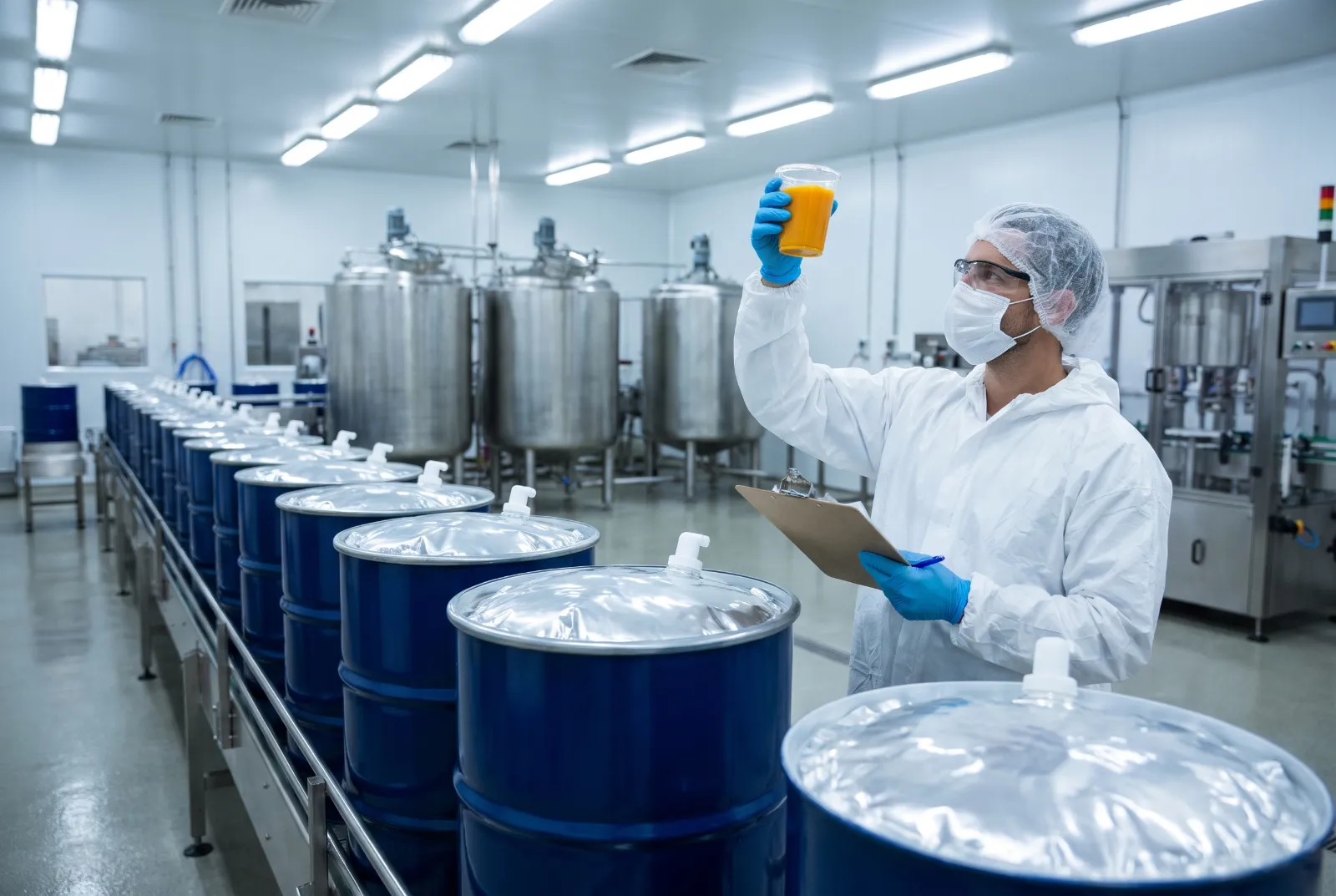
Aseptic fruit puree is fruit that's been milled smooth, heat treated to kill bacteria, then filled into sterile packaging in a sterile environment. Because nothing can get in once the bag is sealed, the puree stays shelf stable at room temperature until it's opened. No preservatives needed.
The word aseptic just means free of contamination. It describes the packing process, not the fruit itself.
How is aseptic puree packed?
The most common formats are:
- Bag in drum: a large sterile foil bag inside a steel or plastic 55 gallon drum. This is the standard for manufacturers.
- Bag in box: a smaller sterile bag inside a carton, easier to handle for smaller runs.
Each bag has a sealed spout, so the puree can be pumped out without exposing the rest of the batch. Once a bag is opened it needs to be refrigerated and used within the time on the spec sheet.
Aseptic puree vs frozen puree
Both are real fruit puree. The difference is how they're kept.
- Storage: aseptic is stored at room temperature before opening. Frozen puree needs a freezer the whole time.
- Logistics: aseptic ships without a reefer truck, which cuts freight cost and frees up freezer space.
- Prep: aseptic is ready to pump. Frozen puree needs to be thawed first.
- Flavor: frozen puree skips the heat step, so some buyers prefer it for fresh tasting products like smoothies and sorbets.
Plenty of companies use both. Aseptic for the bulk of a production run, and frozen where the freshest flavor matters most.
Specs to ask your fruit puree supplier for
A good supplier will send a spec sheet for every lot. These are the numbers that matter most:
- Brix: the sugar content. It decides sweetness and how much your formula needs to adjust.
- pH and acidity: these affect taste, shelf life and how the puree behaves in your process.
- Consistency: how thick the puree is, often measured as Bostwick.
- Color: important for anything where the product is visible.
- Microbiological results: proof the puree is clean.
- Single strength or concentrate: single strength is the puree as it comes from the fruit. Concentrate has water removed and needs to be diluted.
Also ask for a certificate of analysis (COA) with each shipment and lot traceability back to the source.
Who uses aseptic fruit puree?
- Beverage brands: juices, smoothies, kombucha and ready to drink products.
- Breweries: fruited sours and IPAs. See how we work with craft breweries.
- Dairy and frozen desserts: yogurt, ice cream and sorbet.
- Baby food and sauces: where consistency and food safety are everything.
- Bars and restaurants: cocktails and mocktails. See our page for bar programs.
How to choose an aseptic puree supplier
Price per pound matters, but it's rarely what goes wrong. When a puree supply fails, it's usually because of:
- Inconsistent specs: Brix or color that changes from lot to lot and throws off your recipe.
- Single origin risk: one bad harvest and the supplier runs short. Ask how many origins they source from.
- Missing paperwork: no COA, no traceability, no audited food safety certification.
Look for a supplier with GFSI recognized certification, more than one growing region and specs they're willing to put in writing.
Buying fruit puree wholesale?
Patagonia Foods supplies aseptic pineapple and banana puree, plus frozen puree in mango, raspberry, blueberry, peach, dragon fruit, acai, apple, avocado and more. Every lot comes with documentation, and our standard minimum is one pallet.
Request a quote with your fruit, format and volume, or compare all our pack formats.

