


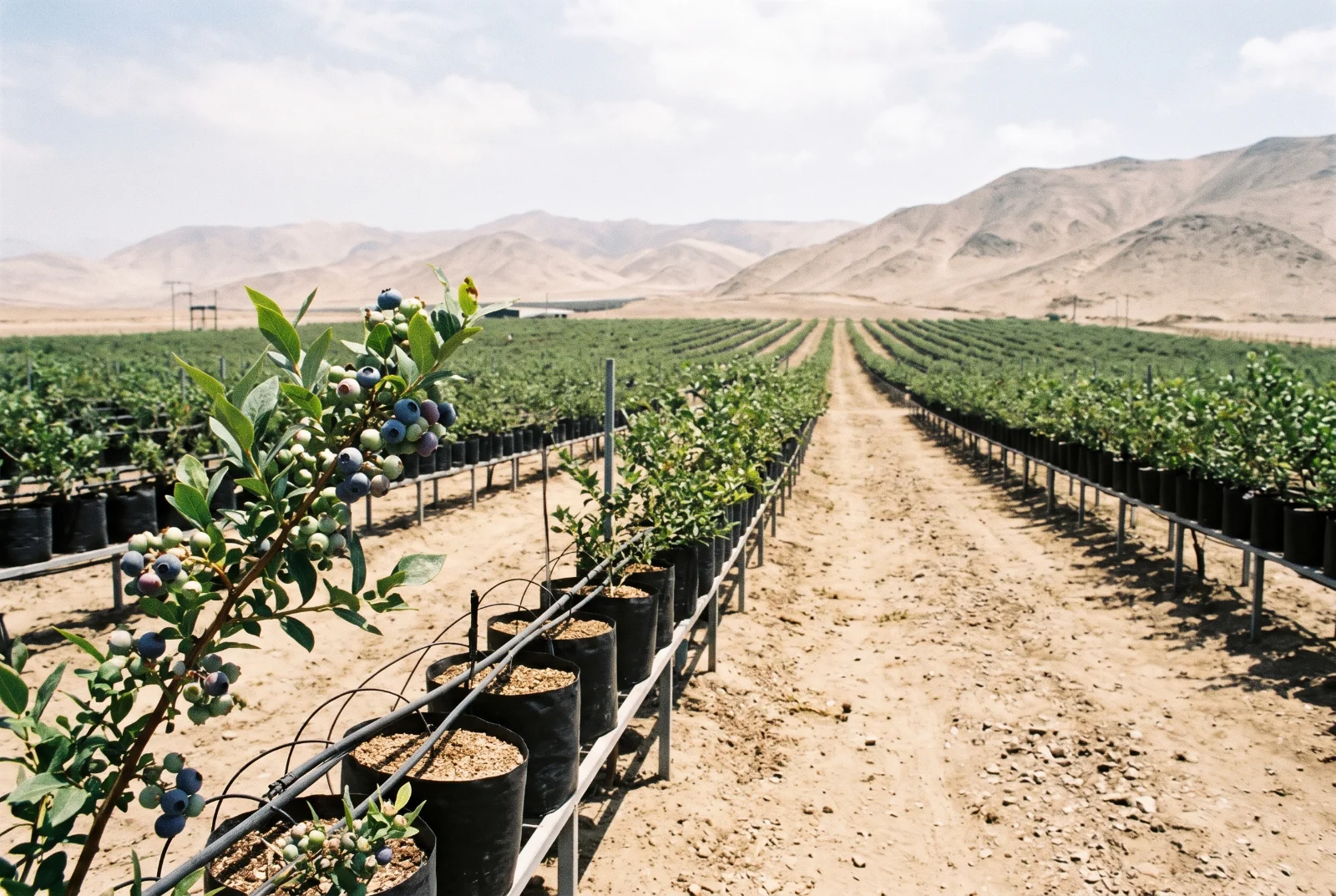
If you buy frozen blueberries, this is the time of year when the supply changes hands. Peru has carried the market since the summer. Now Chile is starting its busiest weeks.
This year, the handoff looks different. Peru's crop came in smaller than expected.
Here's the short answer: Peru's blueberry exports for 2026/27 are now forecast at 344,000 tons, about 10% below last season, after El Niño heat hit the crop. Chile expects a slightly bigger fresh crop than last year, ships most of it from late November to mid-January, and plans to send about 70,000 tons to frozen.
In this guide, you'll see how Peru's blueberry season played out, why the forecast kept falling, what Chile is bringing, and what it all means for your frozen blueberry supply in 2027. Every number links to its source.
Let's dive right in.
Table of Contents
- When Is Blueberry Season in Peru and Chile?
- Peru's 2026/27 Crop: Four Forecasts, Each Lower
- Why Peru's Crop Came in Smaller
- Chile's 2026/27 Season: What to Expect
- Chile and Frozen Blueberries
- What It Means for Frozen Blueberry Buyers
- 5 Ways to Plan Your 2027 Blueberry Supply
- FAQ
When Is Blueberry Season in Peru and Chile?
Peru and Chile are both in the Southern Hemisphere, but they harvest at different times. That's what makes them work so well together for buyers in the US and Europe.
- Peru: the campaign officially runs from May to April, but most of the fruit ships in the second half of the year. Last season, Peru's peak week was week 40, in early October (Portal Frutícola).
- Chile: the season starts later and further south. Chile's Blueberry Committee expects peak shipments between week 49 and week 2, from late November to mid-January, at more than 8,000 tons a week (Fruitnet).
So the year-end handoff is simple: Peru peaks in the fall and winds down toward the new year, and Chile takes over from December into January.
The handoff: when Peru and Chile ship
Main fresh export windows for the 2026/27 season.
Sources: Proarándanos via Portal Frutícola; Frutas de Chile Blueberry Committee via Fruitnet (Oct 2026). Windows are approximate.
| Origin | Peak shipping | 2026/27 fresh export forecast | vs. last season |
|---|---|---|---|
| Peru | Around early October (week 40 this year) | 344,000 t | Down 10.3% |
| Chile | Late November to mid-January (weeks 49 to 2) | 94,071 t | Up about 1% |
Sources: Proarándanos via Portal Frutícola (Oct 2026); Frutas de Chile Blueberry Committee via Diario Frutícola and Fruitnet (Oct 2026). Windows shift a few weeks from year to year.
Peru's 2026/27 Crop: Four Forecasts, Each Lower
Peru's blueberry association, Proarándanos, updates its export forecast through the season. This year, every update came in lower than the one before.
Peru's 2026/27 blueberry export forecast, by release
Fresh exports, in tons. Each update came in lower, and the latest is 10.3% below last season.
Source: Proarándanos forecasts reported by Agraria.pe, Hortidaily and Portal Frutícola (Sep to Oct 2026).
The latest number is 10.3% below last season, and that's with about 15% more hectares in production than last year (Hortidaily). More plants, less fruit.
A few more details from the sixth forecast (Portal Frutícola):
- A flatter peak. Peru's busiest week this year was week 40, with 14,600 tons shipped. That's 30.1% below last year's peak of 20,900 tons in the same week.
- A lighter end of year. For weeks 41 to 53 (October to December), Proarándanos expects 133,500 tons, 24.7% less than the 177,300 tons shipped in the same weeks last season.
- A small tail into 2027. From January to April 2027, it expects 46,600 tons, down 5.3%.
- Organic hit harder. Organic exports are now forecast at 24,500 tons, 31.1% below last season.
Peru's shipments: this season vs. last
Fresh blueberry exports, in tons. The biggest gap is in the last quarter of 2026.
Source: Proarándanos sixth export forecast via Portal Frutícola (Oct 2026).
The season did start strong. Through week 39, Peru had shipped 70,342 tons to the US, 26% more than a year earlier, as the early heat pulled the harvest forward (FreshPlaza). The shortfall shows up later in the season, not at the start.
Why Peru's Crop Came in Smaller
In one word: heat.

Proarándanos says El Niño hit harder than it first expected. Higher temperatures sped up crop development, made the average berry slightly smaller and lowered productivity in some varieties (Gestión).
That explains the odd shape of the season. Faster development pulled fruit forward, so early weeks looked great. But smaller berries and lower yields meant there was less fruit left for the usual fall peak.
It also cost Peru its growth. Back in August, Proarándanos estimated that without El Niño, exports could have grown close to 20% this season, thanks to about 3,500 new hectares coming into production (Diario Frutícola). Instead, the crop is shrinking.
We cover El Niño's effect on mango and other fruit in El Niño 2026: what it means for frozen fruit supply.
A note on these numbers
Proarándanos' forecasts track fresh exports. There's no public forecast for Peru's frozen blueberry volume. But fresh and frozen fruit come from the same fields, so a smaller fresh crop usually means less fruit available for freezing too.
Chile's 2026/27 Season: What to Expect
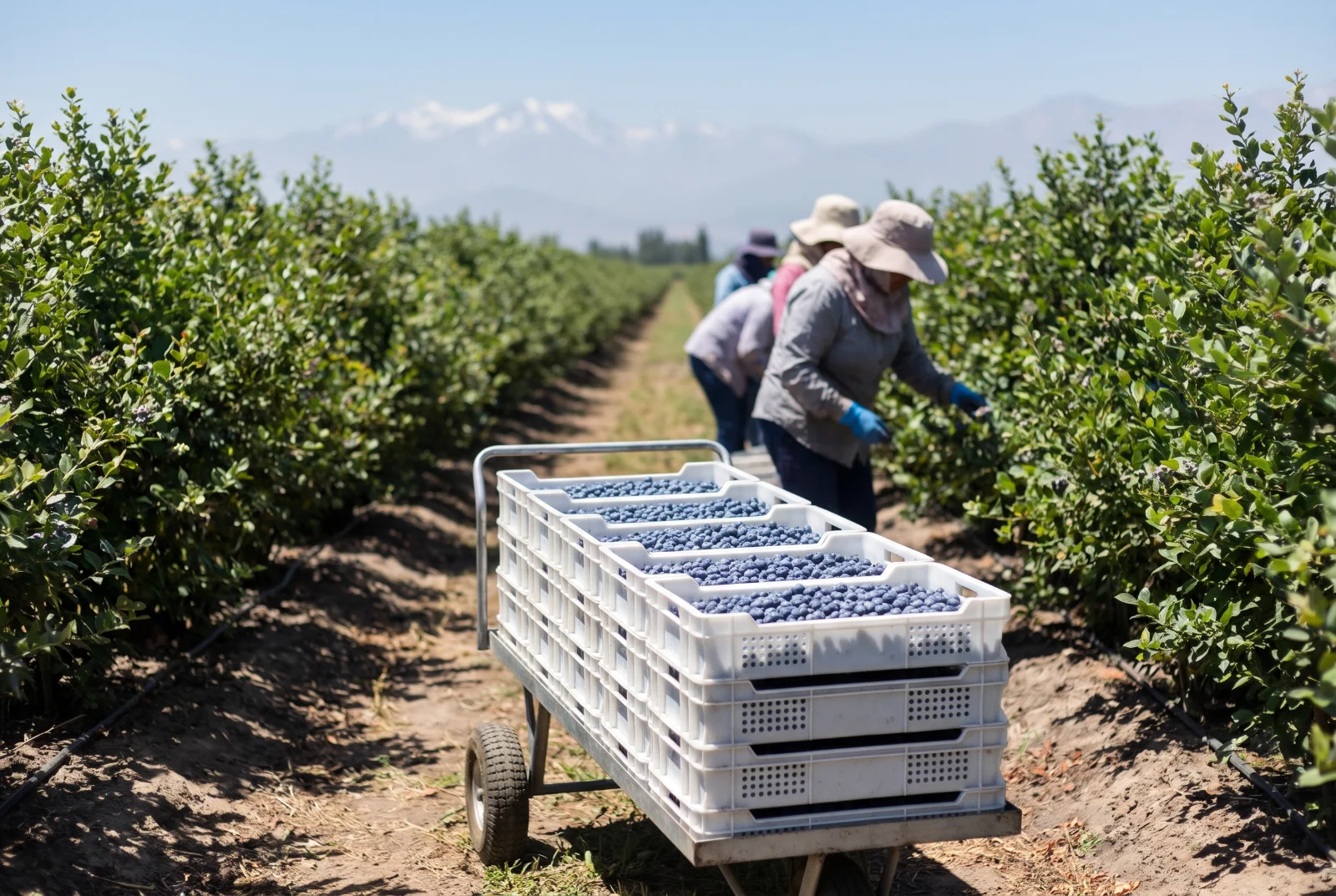
Chile's picture is steadier. At Blueberry Day 2026 in late October, the Frutas de Chile Blueberry Committee forecast 94,071 tons of fresh blueberry exports for 2026/27. That's about 1% more than last season, but 3% below its own earlier estimate, which the committee puts down to the weather (Diario Frutícola).
So far, the committee sees El Niño's impact in Chile as limited (Diario Financiero). But it has said it will keep monitoring orchards through the season.
Two things stand out about Chile this year:
1. Newer varieties are taking over
Chile is replacing older blueberry varieties with newer ones that travel better and hold up longer after harvest. Newer varieties are expected to reach 29,561 tons this season, up 36% from last year (Diario Financiero).
2. A US tariff on Chilean fruit
Chilean blueberries face a 12.5% surcharge in the US this year (Fruitnet). If you import into the US, factor that into your landed cost when you compare origins.
Chile and Frozen Blueberries
For frozen buyers, Chile matters even more than its fresh numbers suggest.
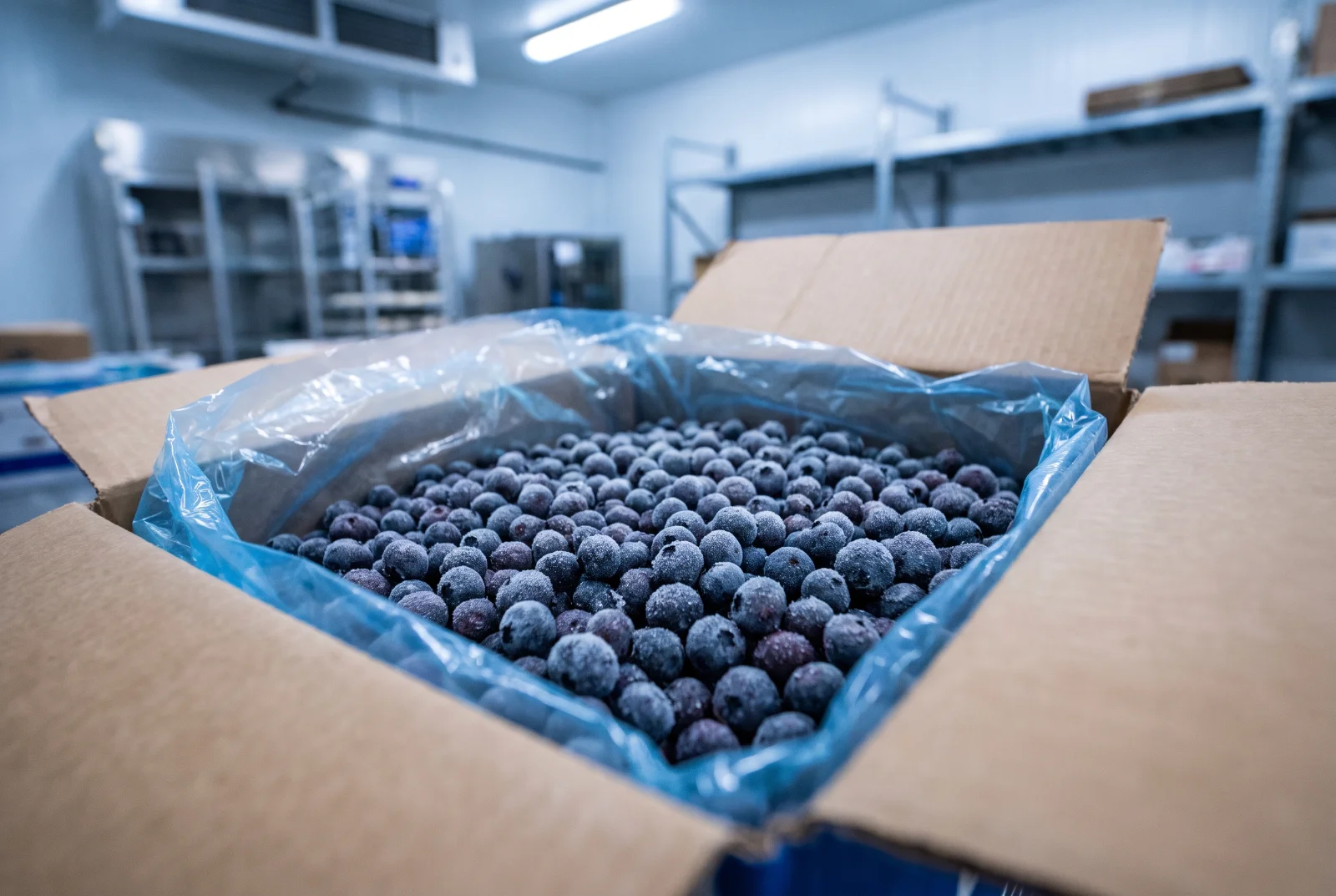
Chile was the world's top exporter of frozen cultivated blueberries in 2025, shipping about 72,000 tons and coming in ahead of Canada and the US, according to figures presented at Blueberry Day 2026 (Blueberries News). Its frozen blueberry exports grew 46% in 2025 (FreshPlaza).
For 2026/27, the industry expects about 70,000 tons of Chile's blueberries to go to frozen. Add that to the fresh forecast and Chile's total blueberry exports would reach about 164,000 tons (International Blueberry Organization).
Where Chile's 2026/27 blueberries are going
Projected exports, in tons. Frozen is about 43% of the total.
Sources: Frutas de Chile and Chilealimentos at Blueberry Day 2026, via Diario Frutícola and IBO.
Why so much frozen? Older varieties that are losing ground in the fresh market still work well for freezing. IQF gives growers a profitable outlet for that fruit (IBO). In the Ñuble region, IQF blueberries make up at least half of shipments, and frozen blueberries outsold fresh in value there in 2025 (FreshPlaza).
The US is still the main market for Chilean frozen blueberries (FreshPlaza).
What It Means for Frozen Blueberry Buyers
Putting it together, here's what the sources support, and what they don't.
1. Less Peruvian fruit through the end of 2026
The biggest gap is in the October to December window, where Peru's shipments are expected to run about 25% below last year. If Peruvian fruit is a big part of your program, that's the period to watch.
2. Chile carries more of the load
Chile's fresh crop is roughly flat, and its frozen volume is large. That makes Chile the natural backstop as Peru winds down, especially for IQF blueberries in the first half of 2027.
3. Don't assume prices only go up
A smaller crop usually puts upward pressure on prices. But fresh prices haven't followed a straight line. In September, Peruvian blueberries arrived in the US at $6.14/kg, 16% below the same month in 2025, and one analysis assumes prices 3% to 12% below 2025 from October onward (FreshPlaza). On the frozen side, Chilealimentos reported firm IQF blueberry prices in the US in the first half of 2026 (Blueberries Consulting). Expect movement, not a predictable trend.
What's still uncertain
How much of Peru's smaller crop reaches freezing plants, how Chile's weather holds through January, and where frozen blueberry prices land in 2027. Forecasts are still being updated, so check in with your supplier regularly.
5 Ways to Plan Your 2027 Blueberry Supply
Step #1: Lock in volume early
If you need bulk frozen blueberries for the first half of 2027, talk to your supplier now. When one origin comes in short, fruit gets committed early.
Step #2: Approve more than one origin
Peru, Chile and Mexico harvest at different times. Getting a second origin approved by your QA team now makes it easy to switch if one comes in short.
Step #3: Check the specs, not just the price
Smaller berries are part of this year's story in Peru. If berry size matters for your product, confirm the size range and grade before you order. Our IQF blueberry buying guide covers what to check.
Step #4: Plan organic separately
Peru's organic exports are down about 31%, much more than conventional. If you buy organic, plan that program on its own timeline.
Step #5: Factor in tariffs
If you import into the US, include the 12.5% surcharge on Chilean fruit when you compare origins on landed cost.
FAQ
When is blueberry season in Peru?
Peru's campaign officially runs from May to April, but most of the fruit ships between July and December. This season, shipments peaked in week 40, in early October.
When is blueberry season in Chile?
Chile ships most of its fresh blueberries from late November to mid-January. Frozen processing follows the fresh harvest.
Is there a blueberry shortage in 2026?
Not a shortage in the strict sense. Peru's fresh exports are expected to fall about 10% from last season, with the biggest gap from October to December. Chile's crop is roughly flat. Supply is tighter, especially from Peru, but blueberries are still available.
Why are Peru's blueberry exports down this year?
El Niño heat. Proarándanos says higher temperatures sped up crop development, made berries slightly smaller and lowered yields in some varieties.
Which country exports the most frozen blueberries?
For cultivated blueberries, Chile. It exported about 72,000 tons of frozen cultivated blueberries in 2025, ahead of Canada and the US.
The Bottom Line
Peru's blueberry season came in about 10% smaller than last year after El Niño heat cut yields and berry size. Chile is taking over on schedule with a slightly bigger fresh crop and about 70,000 tons headed to frozen. If blueberries are part of your 2027 plan, now is a good time to lock in volume and line up more than one origin.
Planning your 2027 blueberry supply? We source IQF blueberries from Mexico, Peru and Chile. See our frozen blueberry page, or request a quote and our team will help you plan around this season.
Sources
- Portal Frutícola: Proarándanos sixth export forecast, 344,000 tons (Oct 2026, Spanish)
- Hortidaily: Peru will export fewer blueberries than last season despite a larger cultivated area (Oct 2026)
- Agraria.pe: Proarándanos September forecast, 381,844 tons (Sep 11, 2026, Spanish)
- Gestión: El Niño hits Peru's blueberry exports (Oct 2026, Spanish)
- Diario Frutícola: El Niño reduces Peruvian blueberry size and growth potential (Aug 2026, Spanish)
- FreshPlaza: Peru's blueberry outlook weakens despite strong early-season exports (Oct 2026)
- Diario Frutícola: Blueberry Day 2026, Chile adjusts its blueberry forecast (Oct 2026, Spanish)
- Diario Financiero: Blueberry Day kicks off Chile's export season (Oct 30, 2026, Spanish)
- Fruitnet: Chile's blueberry revival continues (Oct 2026)
- International Blueberry Organization: Chile's frozen blueberries could reach 70,000 tons in 2026/27 (Nov 5, 2026, Spanish)
- Blueberries News: New forecast and opportunities at Blueberry Day 2026 (Oct 30, 2026, Spanish)
- FreshPlaza: Chilean blueberry exports rise 2.7% as new varieties gain share (2026)
- FreshPlaza: Chile's frozen blueberry exports grow 23.4% (2026)
- FreshPlaza: Peru expects blueberry exports to reach 412,500 tons in calendar 2026 (2026)
- Blueberries Consulting: Frozen gains weight in Chile's blueberry exports (2026)

