


Buying organic frozen fruit wholesale is harder than buying conventional. The certified grower pool is smaller, harvests swing more from year to year, and an organic order can never be filled with conventional fruit.
So the buyers who keep organic lines running all year don't just pick a supplier. They pick origins.
In this guide, you'll see which organic frozen fruits are available wholesale, where each one is grown, when each origin harvests, and how to build an organic program that doesn't run dry halfway through the year.
Let's dive right in.
Table of Contents
- Which Organic Frozen Fruits Can You Buy Wholesale?
- Where Organic Frozen Fruit Comes From: 7 Origins
- How to Keep Organic Supply Running Year-Round
- What Organic Certification Covers on a Wholesale Order
- Wholesale Formats and How to Spec Your Order
- 7 Questions to Ask an Organic Frozen Fruit Supplier
Which Organic Frozen Fruits Can You Buy Wholesale?
Patagonia Foods supplies 11 organic frozen fruits from 7 origins. Here's the full list, with the harvest window at each origin.
| Organic fruit | Origins | Harvest windows at origin |
|---|---|---|
| Strawberries | Central Mexico, Baja California | Mexico: Dec to Jun |
| Raspberries | Central Mexico, Chile | Mexico: Oct to Jun Chile: Nov to Apr |
| Blackberries | Mexico, Chile | Mexico: Oct to May Chile: Dec to Mar |
| Blueberries | Mexico, Peru, Chile | Peru: Sep to Dec Chile: Nov to Mar Mexico: Nov to May |
| Mango | Central Mexico, Peru | Peru: Dec to Mar Mexico: Jun to Sep |
| Pineapple | Central America, Peru | Year round |
| Bananas | Mexico, Ecuador | Year round |
| Coconut | Vietnam | Year round |
| Avocado | Peru | Mar to Aug |
| Açaí | Brazil | Aug to Dec |
| Peaches | Chile | Jan to Mar |
One thing to keep in mind: harvest windows tell you when fruit is picked and frozen, not when you can buy it. IQF fruit is stored frozen after harvest, so a well-run supplier ships organic fruit all year from inventory. The windows matter because they decide when new crop fruit arrives and when inventory is at its lowest.
For the full conventional calendar, including fruits not yet offered as organic, see our growing regions and seasonality page.
Where Organic Frozen Fruit Comes From: 7 Origins
Six of the seven origins are in Latin America, split across both hemispheres. That split is the whole point.
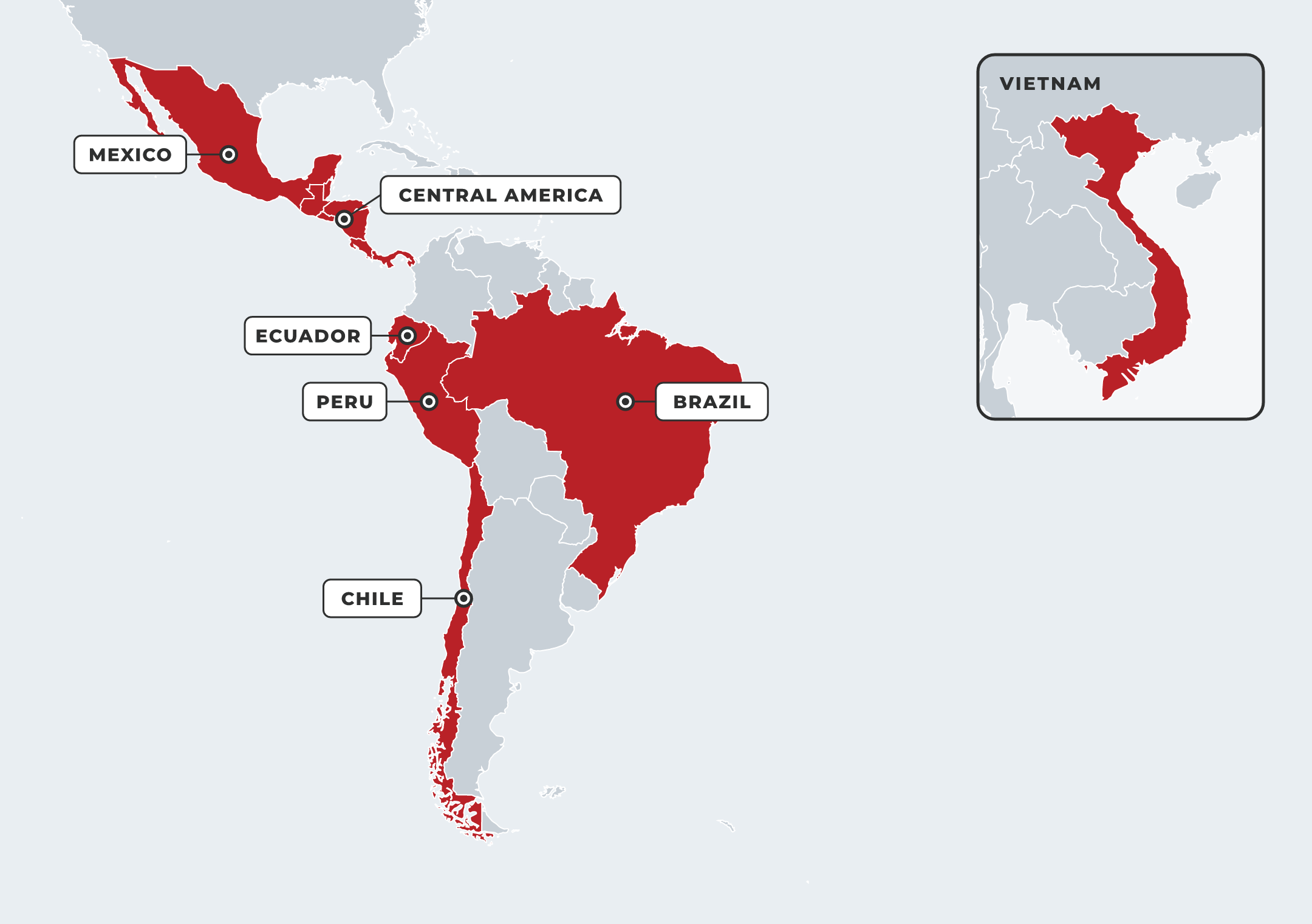
Here's why it matters:
When it's winter in Chile, it's summer in Mexico. When Peru's mango season ends in March, Mexico's starts in June. Sourcing the same fruit from origins in both hemispheres means one harvest is usually starting as another is ending.
Let's look at each fruit group.
Organic Berries: Mexico, Peru and Chile
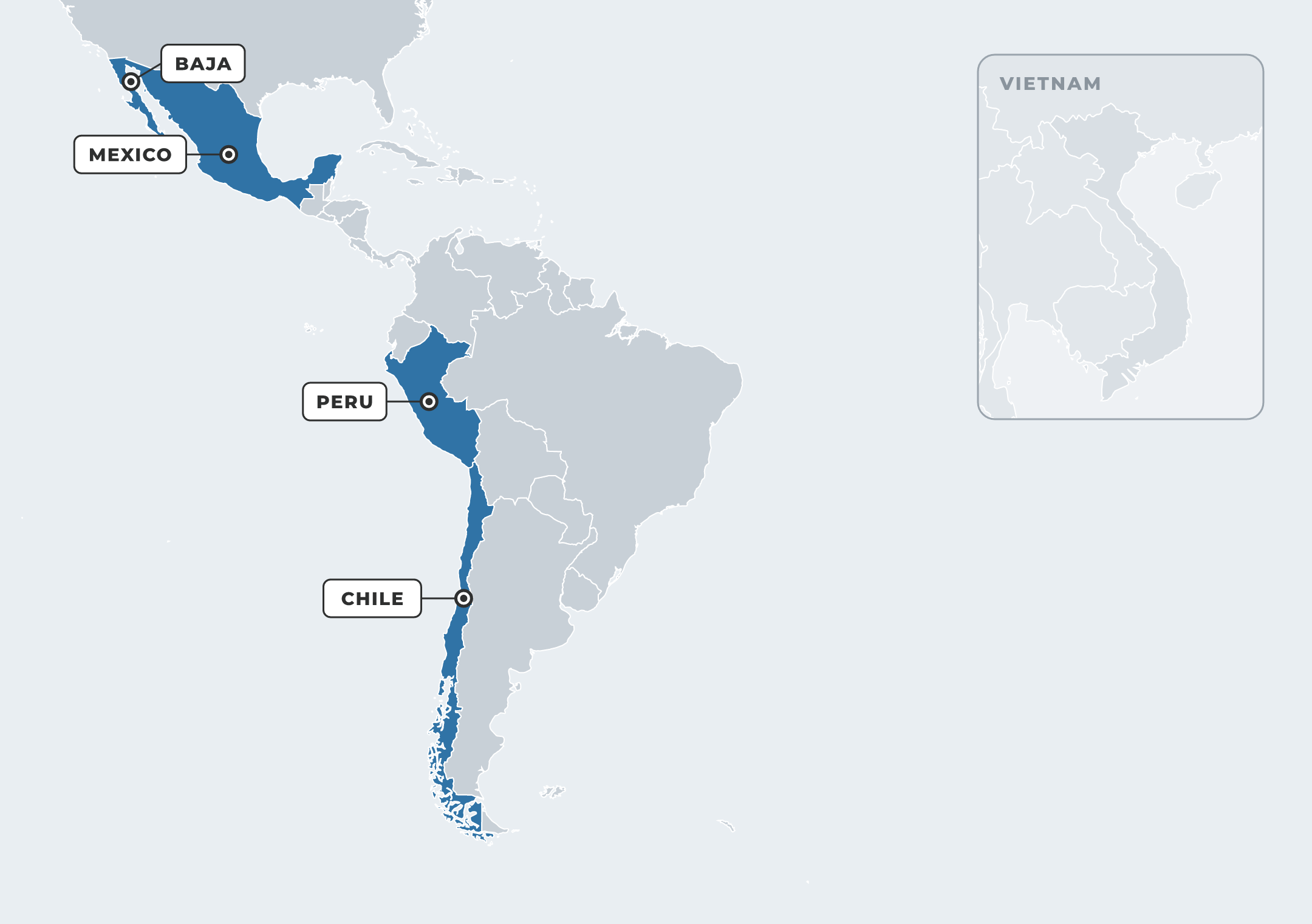
- Strawberries: Central Mexico and Baja California
- Raspberries: Central Mexico and Chile
- Blackberries: Mexico and Chile
- Blueberries: Mexico, Peru and Chile
Blueberries are the best example of multi-origin sourcing. Peru starts in September, Chile picks up in November, and Mexico runs through May. Three origins cover nine months of new crop.
Strawberries are the opposite. Organic supply comes from Mexico only, so contracting early matters more here than for any other berry.
Organic Tropicals: Mexico, Central America, Ecuador, Peru and Vietnam
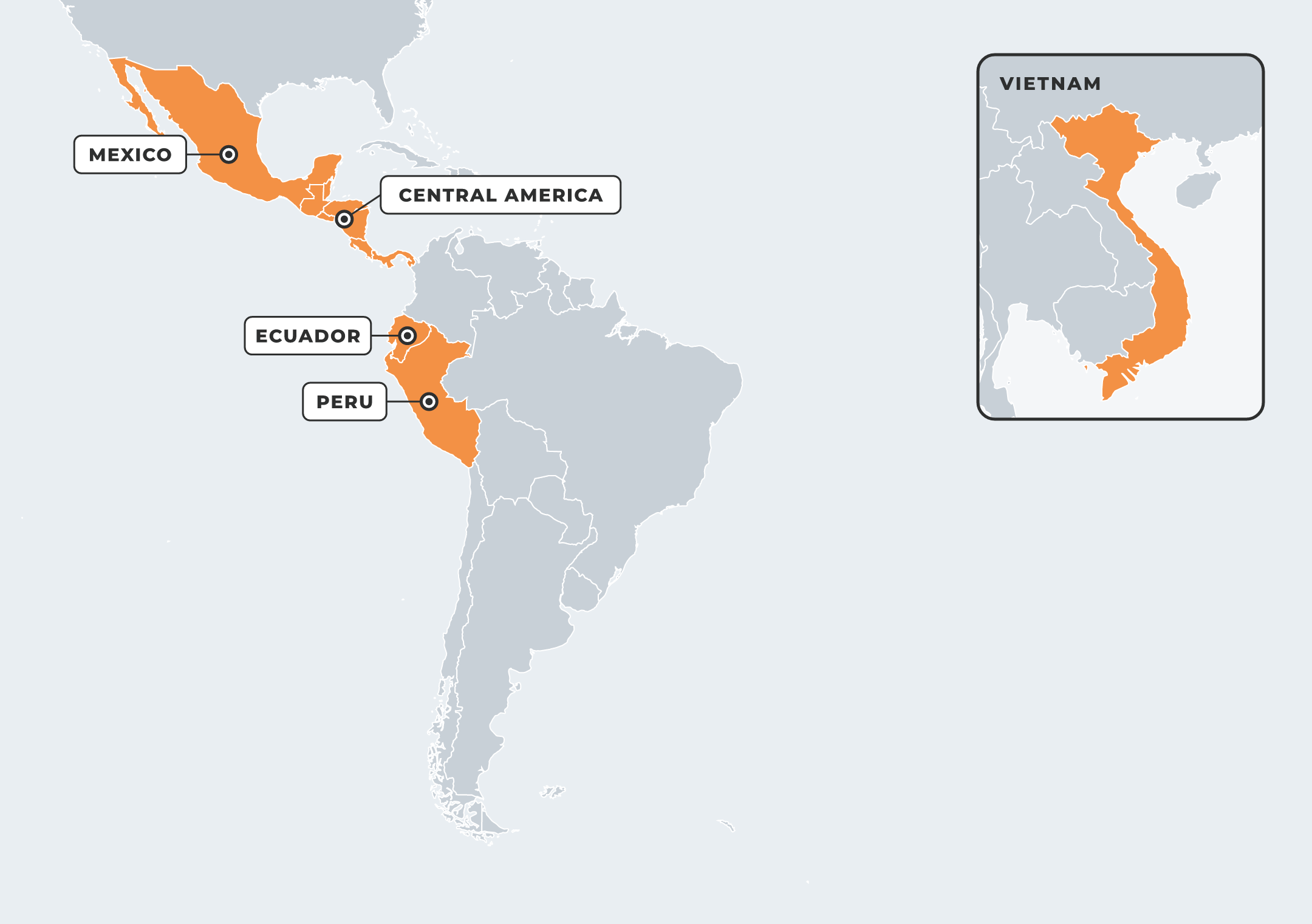
- Mango: Central Mexico and Peru
- Pineapple: Central America and Peru
- Bananas: Mexico and Ecuador
- Coconut: Vietnam
Pineapple, bananas and coconut grow year round, so supply is steadier. Mango is seasonal at each origin, but Peru (December to March) and Mexico (June to September) cover different halves of the year.
Organic Superfruits and Stone Fruit: Peru, Brazil and Chile
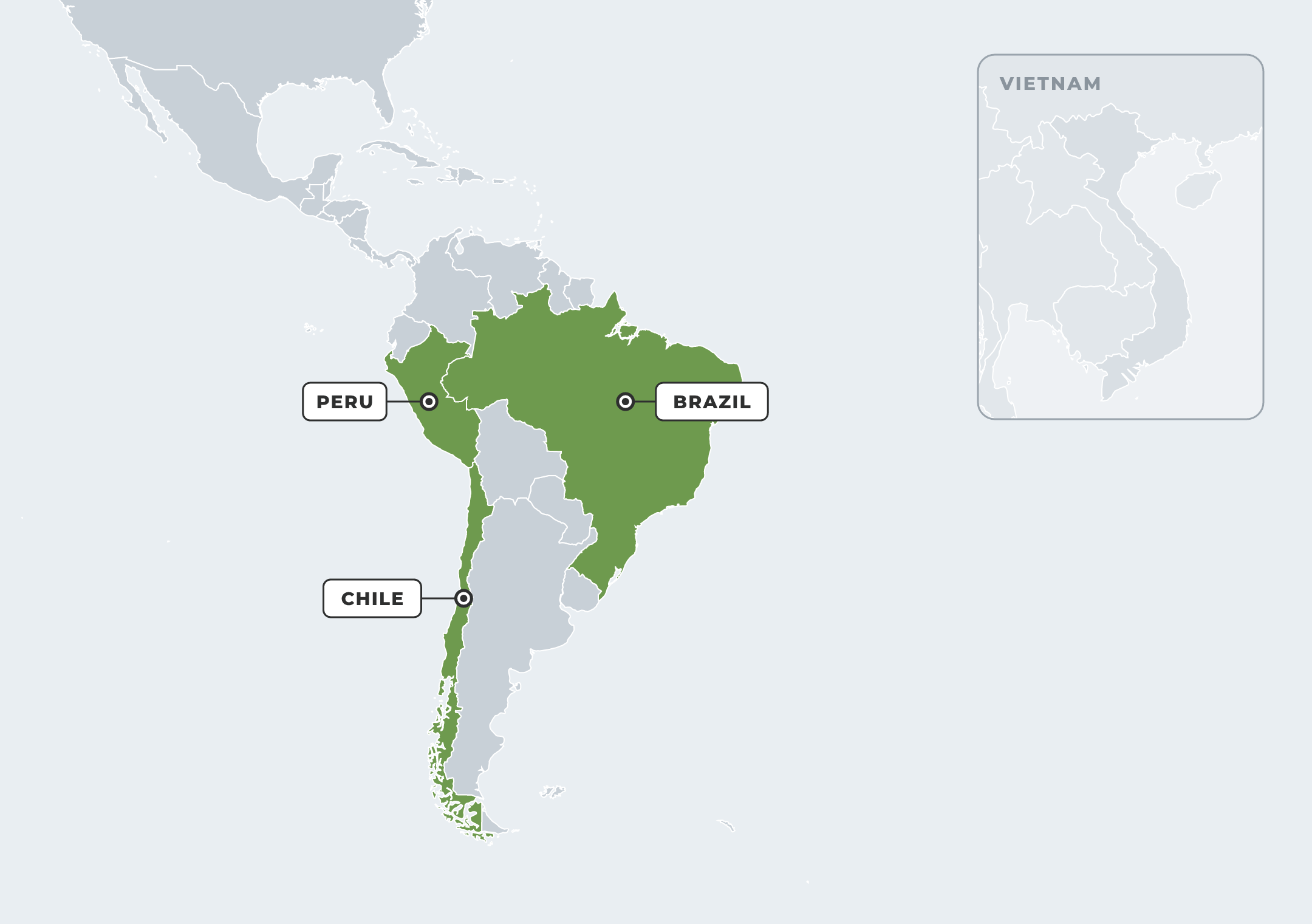
- Avocado: Peru
- Açaí: Brazil
- Peaches: Chile
Each of these comes from a single organic origin with one harvest a year. That makes them the fruits to plan furthest ahead. If açaí is a core SKU for you, our wholesale açaí page covers it in more detail.
How to Keep Organic Supply Running Year-Round
Organic supply is less forgiving than conventional. When a conventional harvest comes in short, a supplier can pull from hundreds of other growers. When an organic harvest comes in short, the backup pool is much smaller.
Here's how buyers with steady organic programs handle it:
Step #1: Map Each SKU to Its Origins
Use the table above. For every organic fruit you buy, note how many origins it has and when each one harvests. Single-origin fruits (strawberries, avocado, açaí, peaches, coconut) carry the most supply risk.
Step #2: Contract Before the Harvest, Not After
Organic volume gets committed early. Lock in your annual volume before harvest starts at origin, so your fruit is allocated before the season's crop is sold.
Step #3: Approve a Second Origin Ahead of Time
If a fruit has two origins, get both approved with your QA team now. Switching from Peruvian to Mexican mango mid-year is easy if the second origin is already on your approved list. It's slow if it isn't.
Step #4: Build Inventory Before the Gap
For single-origin fruits, the lowest-inventory point is right before the next harvest. Schedule a larger delivery ahead of that window so production doesn't stall.
Buyer Tip
Ask your supplier for their organic inventory position by month, not just a price. A supplier who can show you when stock is lowest is a supplier who's planning for it.
What Organic Certification Covers on a Wholesale Order
Every organic fruit on this list is certified to the USDA National Organic Program standard. Here's what that guarantees, in plain terms.
Certified organic fruit is grown:
- On clean soil: no prohibited substances applied to the land for 3 years before harvest
- Without GMOs: genetic engineering isn't allowed at any stage
- With natural inputs: no synthetic fertilizers; soil is built with practices like crop rotation and compost
And to keep the organic claim, a farm has to:
- File an organic system plan describing how it grows
- Pass an on-site inspection
- Be certified by a USDA-accredited certifying agent
- Be inspected again every year
(USDA AMS)
For your own label, the rule to remember: a product sold as "organic" must contain at least 95% certified organic ingredients to carry the USDA Organic seal.
Buying imported organic fruit also comes with its own paperwork, including an NOP Import Certificate for every shipment. We cover that step by step in our guide to organic vs. conventional frozen fruit, along with how the organic price premium works.
Wholesale Formats and How to Spec Your Order
Organic fruit comes in the same formats as conventional. The format you choose depends on where the fruit goes next:
- Whole IQF fruit: berries and other fruit frozen individually, so you can pour exactly what you need. Best for smoothies, bakery and retail repacking.
- Diced or chunked IQF: mango, pineapple, peaches and other fruit cut to a consistent size. Best for yogurts, desserts and ready-to-blend lines.
- Aseptic purées: fruit processed into purée and packed sterile. Best for beverages and manufacturing.
- Ready-to-blend smoothie packs: pre-portioned fruit blends for foodservice.
Not sure which one fits? Our guide to frozen fruit formats compares them side by side, and our pack formats page shows what's available.
When you request a quote, include these details so you get an accurate price the first time:
- Fruit and variety (if it matters to your product)
- Format and cut size
- Grade and key specs (Brix, defect tolerance, micro limits)
- Pack size and annual volume
- Delivery location and timing
- Certifications you need on the file (organic, kosher, GFSI scheme)
7 Questions to Ask an Organic Frozen Fruit Supplier
Before you approve an organic supplier, get clear answers to these:
- Which origins does each organic fruit come from? You want names, not "Latin America."
- Is the fruit certified at every step? The grower, packer and exporter all need active certificates.
- Which certifier covers each origin? You can look up any certificate in the USDA Organic INTEGRITY Database.
- What's the backup if an origin comes in short? Ask what happened in the last short harvest.
- When is organic inventory lowest for each fruit? Plan your contract around it.
- What food safety certifications cover the plants? Look for a GFSI-recognized scheme such as FSSC 22000.
- Can you hold organic to the same spec as conventional? The answer should be yes. Organic earns a price premium, not a quality discount.
The Bottom Line
Buying organic frozen fruit wholesale comes down to origins. Know where each fruit is grown, when each origin harvests, and which fruits depend on a single source. Then contract early, approve a second origin where one exists, and plan inventory around the gaps.
Patagonia Foods supplies 11 organic frozen fruits from 7 origins across Latin America and Asia, backed by USDA Organic, FSSC 22000 and ISO 9001 certifications.
Want pricing and availability for your organic program? Request a quote and our team will walk you through current organic availability by fruit and origin.

