


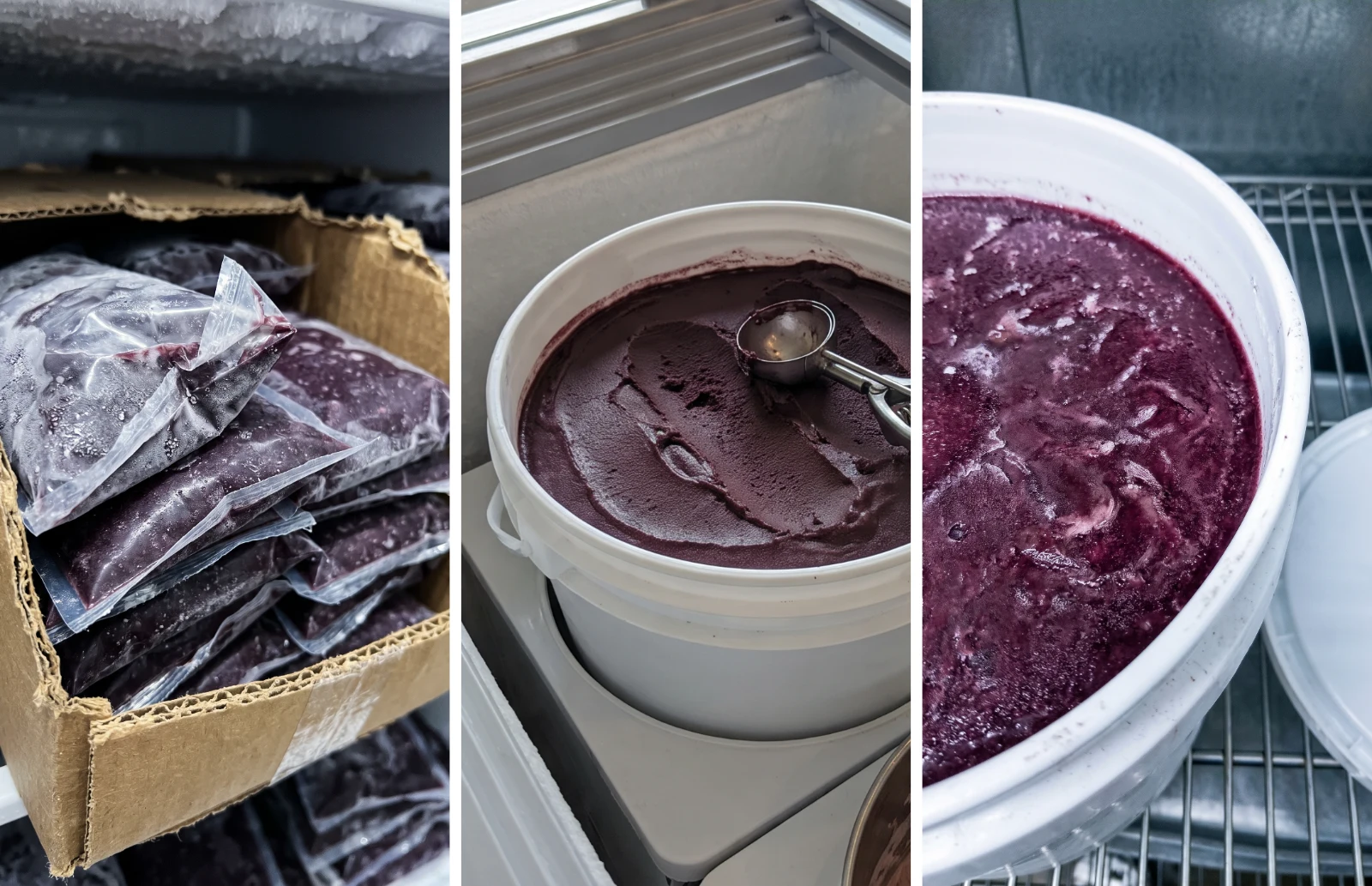
If you sell acai bowls or smoothies, the format you buy your acai in matters almost as much as the acai itself.
Pick the wrong one and you feel it every shift. Staff cutting open packs during the lunch rush. Bowls that melt before they reach the table. A freezer full of pails you can't get through before the next delivery.
We supply frozen acai to bowl shops, smoothie bars, cafes and food manufacturers, and we see the same question come up again and again: should we buy frozen acai packets, tubs or bulk?
In this guide, you'll see how each format works, what it costs you in labor and freezer space, which grade to ask for, and how to match the format to your business.
Let's dive right in.
Table of Contents
- The 4 main frozen acai formats
- Frozen acai packets
- Acai tubs (scoopable)
- Bulk acai puree
- Packets vs tubs vs bulk, side by side
- Check the grade before the price
- Sweetened or unsweetened?
- Which format fits your business
- Storage and handling
The 4 main frozen acai formats
Almost all frozen acai sold to businesses comes in one of four formats:
- Packets: pre-portioned frozen acai puree, usually 100 g each. You drop one or two in the blender and go.
- Tubs: scoopable acai, a frozen base with a soft, sorbet-like texture that you scoop straight from the freezer. Sold in pails.
- Bulk puree: acai puree in large pails or 1 kg bags, portioned by you.
- Soft serve mix: a fruit-based mix that gets poured into a soft serve machine.
All four start the same way. The acai is pulped and frozen within hours of harvest. The difference is how it's portioned, how it's prepared at your counter, and what that does to your labor and consistency.
Frozen acai packets
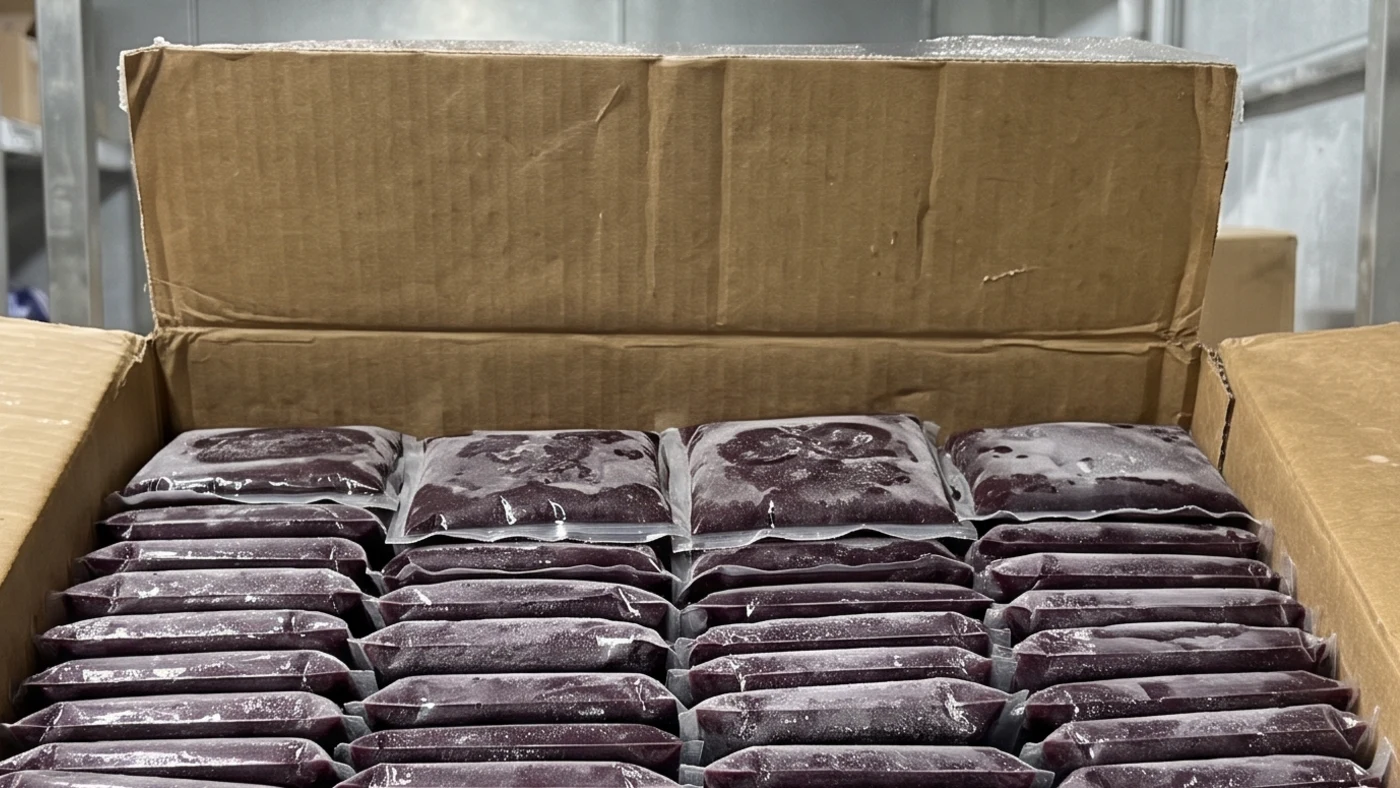
Frozen acai packets are the format most people picture. Each packet holds a single portion of acai puree, frozen flat so it breaks up easily in a blender.
Our acai smoothie packs are 100 g each, packed 60 to a case (6 kg, or 13.2 lb per case). That's the most common size in foodservice, and most shops use one packet for a smoothie and two for a classic bowl.
Why shops like packets:
- Portion control is built in. Every bowl uses the same amount of acai, so your food cost per bowl stays the same no matter who's on shift.
- Less waste. You only open what you need. Nothing sits half used in the freezer.
- Easy training. New staff can make a consistent bowl on day one.
- Fast to blend. Thin, flat packs break up quickly, which matters when the line is out the door.
The tradeoffs:
- Higher cost per pound. You're paying for the packaging and the portioning.
- More packaging waste. Sixty wrappers per case adds up.
- Opening packs takes time. In a busy shop, cutting open packs is one of the slower steps, and it's where bits of plastic can end up in the blender if staff rush.
Best for: smoothie bars, cafes and juice chains that sell acai as one item on a bigger menu, and any shop where consistency between staff is the top priority.
Acai tubs (scoopable)

Scoopable acai is a frozen base that stays soft enough to scoop straight from the freezer, like sorbet. There's no blending. You scoop it into the bowl, add toppings and hand it over.
Ours comes in a 3 gallon pail (about 8.5 kg, or 18.7 lb).
Why shops like tubs:
- The fastest service. Scoop, top, serve. No blender noise, no cleanup between orders.
- A consistent texture. The base is made to hold its shape, so bowls don't turn runny on the way to the table.
- Great for dessert counters. It works like ice cream, so it fits shops that already scoop.
The tradeoffs:
- It's a finished product. Scoopable blends usually include a sweetener, and some include guarana or other fruit. You have less control over the recipe.
- Portions depend on the scoop. Without a set scoop size, food cost can drift.
- Freezer temperature matters. It needs a dipping cabinet or freezer that keeps it scoopable without letting it soften too much.
Best for: high volume acai bowl shops, dessert counters and any operation where speed at the counter beats everything else.
Bulk acai puree
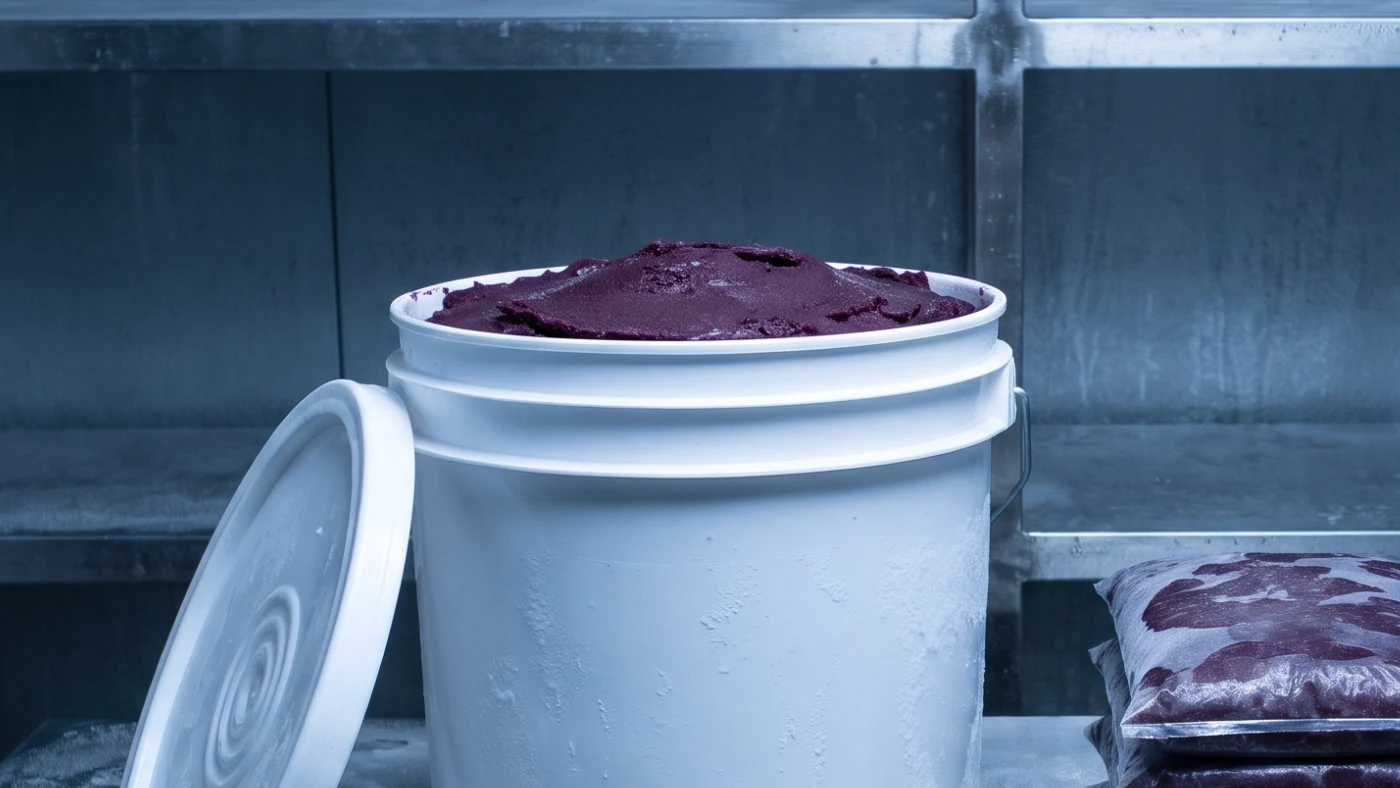
Bulk acai is the same puree that goes into packets, just without the individual portioning. We pack it two ways:
- 5 gallon pail: about 18 kg (40 lb) of puree.
- 20 kg case: twenty 1 kg bags.
The 1 kg bags are the middle ground a lot of shops don't know about. They're easier to handle than a pail and much cheaper per pound than 100 g packets.
Why buyers choose bulk:
- The lowest cost per pound. Less packaging and less handling at the plant.
- Full control of the recipe. You decide what goes in: sweetener, banana, guarana, or nothing at all.
- Less packaging waste. One pail replaces 180 packets.
- Built for production. Manufacturers making sorbet, frozen desserts, drinks or bases need bulk.
The tradeoffs:
- You do the portioning. That means a scale, a prep step and a little more training.
- Thaw planning. Bulk puree has to be broken down or tempered before use, so you need to plan your prep.
- Food safety on your side. Once a bag or pail is open, it's on you to handle it properly.
Best for: acai bowl shops that make their own house base, multi-location brands with a central kitchen, and manufacturers.
Packets vs tubs vs bulk, side by side
Here's how the three main formats compare on the things that affect your margins:
- Cost per pound: bulk is lowest, packets are highest, scoopable sits in between because it's a finished blend.
- Labor per bowl: scoopable is lowest (scoop and serve), packets are low (open and blend), bulk is highest (weigh, prep, blend).
- Consistency: packets and scoopable are the most consistent. Bulk is only as consistent as your prep.
- Recipe control: bulk gives you full control, packets give you some (you choose what to blend in), scoopable gives you very little.
- Freezer space: bulk is the most compact per pound. Packets take the most space because of the cases.
- Packaging waste: packets create the most, bulk the least.
A quick way to compare: one 5 gallon pail of puree (about 18 kg) holds roughly the same acai as 180 packets of 100 g, or three cases. If you go through three or more cases a week, it's worth pricing bulk.
Check the grade before the price
Two packets can look the same and perform very differently. The reason is fruit solids.
Brazil's Ministry of Agriculture grades acai by how much actual fruit is in the puree versus water:
- Popular or fino: at least 8% solids.
- Medio: at least 11% solids.
- Especial or grosso: at least 14% solids. This is what's often sold as Grade A.
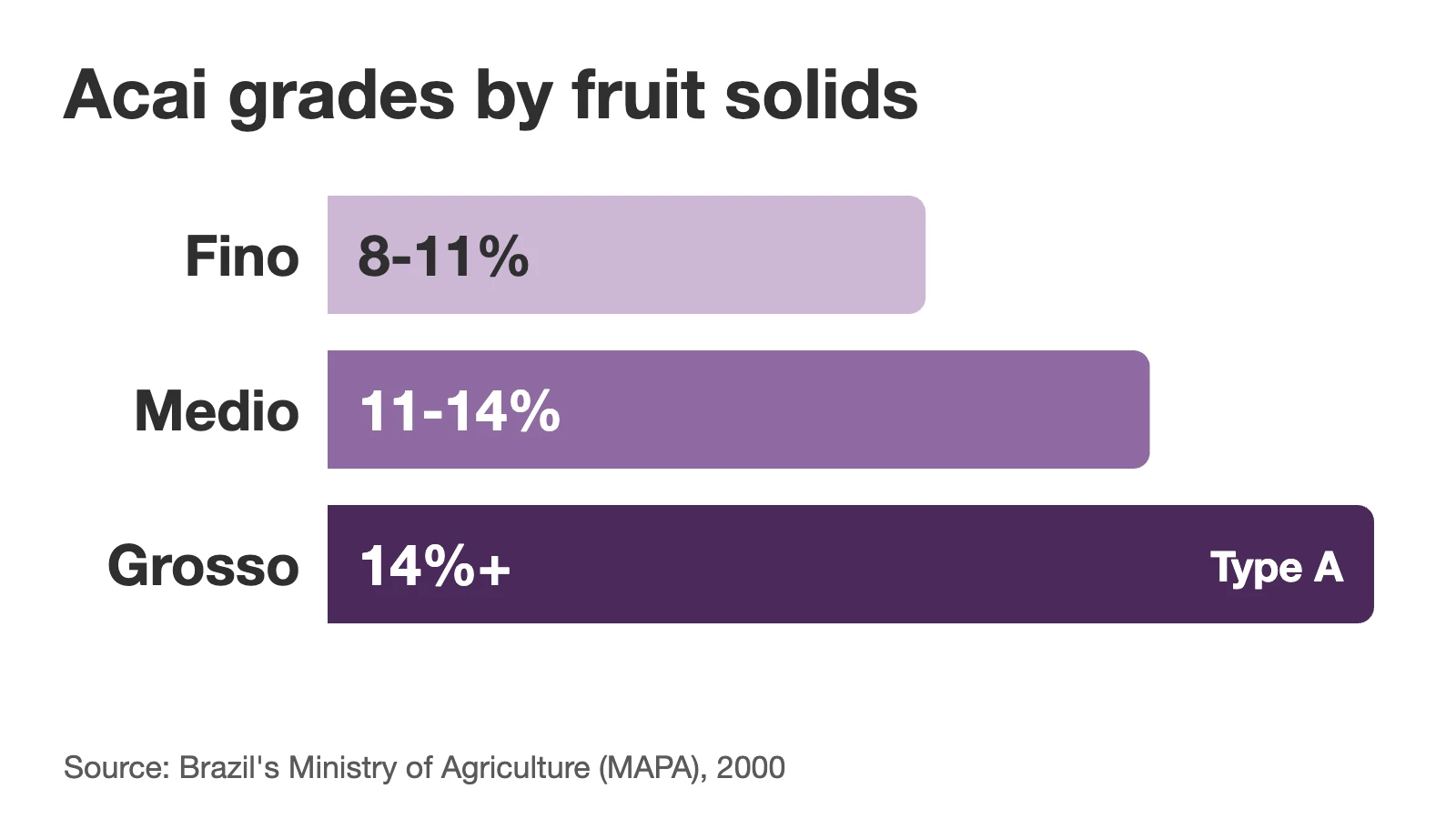
Lower solids means more water. In a bowl, that shows up as acai that blends thin, melts fast and can't hold toppings. In the US, suppliers don't have to put the grade on the label, so ask for it on the spec sheet.
When you compare quotes, compare price per pound at the same grade. A cheaper packet with less fruit in it isn't cheaper per bowl if you need more of it to get the texture right.
Sweetened or unsweetened?
Every format comes in different blends. The two you'll see most:
- Unsweetened acai packets: pure acai, sometimes with a little citric acid. Earthy and slightly tart. Best if you sweeten with your own fruit, honey or agave, or if you sell to health focused customers.
- Sweetened blends: acai with cane sugar, and often guarana. Closer to the sweet bowls most customers expect, with less prep.
Many shops stock both: unsweetened for smoothies and a "pure" bowl, sweetened for their signature bowl. If you're not sure where to start, our guide to acai base explains how shops build their house blend.
Which format fits your business
There's no single best format. It depends on how you sell acai.
- Smoothie bar or cafe, acai is one item on the menu: start with 100 g packets. You get consistency without a prep step.
- Acai bowl shop, under a few hundred bowls a day: packets or scoopable. Choose scoopable if speed is your bottleneck, packets if you want more control of the recipe.
- High volume acai bowl shop or franchise: bulk puree in 1 kg bags or pails, made into a house base. It's where the margin is at scale.
- Dessert counter or frozen yogurt shop: scoopable, or soft serve mix if you already run a soft serve machine.
- Manufacturer or beverage brand: bulk puree, with specs and documentation for every lot.
A lot of growing shops end up with two formats: packets or scoopable at the counter, and bulk for a house base or new menu items. For topping ideas that protect your margin, see our ranking of the best fruits for acai bowl shops.
Storage and handling
Whatever format you choose, frozen acai is only as good as your freezer.
- Keep it at 0°F (-18°C) or colder. At that temperature, our frozen acai has a 24 month shelf life.
- Don't thaw and refreeze. It changes the texture and dulls the color.
- Keep packaging sealed until you're ready to use it.
- Rotate stock. First in, first out, every delivery.
Buying frozen acai wholesale?
Patagonia Foods supplies frozen acai from Brazil and Peru in 100 g smoothie packs, bulk puree (5 gallon pails and 1 kg bags), scoopable pails and soft serve mix. USDA Organic acai is available from Brazil, and we can private label with custom formats and case sizes.
Our minimum is one full pallet, and most orders ship within 2 to 5 business days. See the full specs on our acai product page, or learn more about how we work with acai bowl shops.
Request a quote with your format, blend and volume, and we'll send pricing and spec sheets.

