


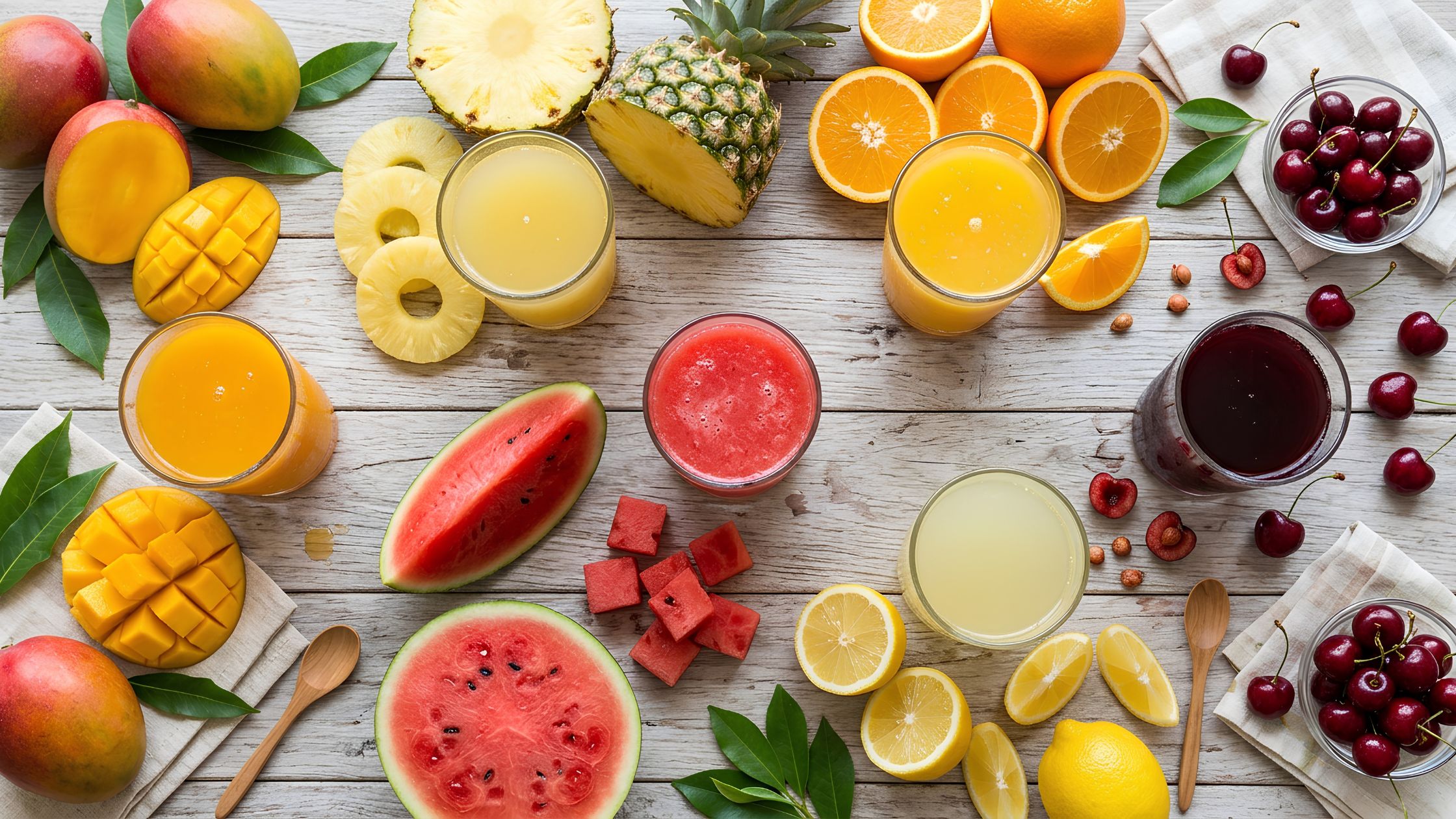
Most bad juice isn't bad because of the recipe. It's bad because of the fruit.
You can follow a great combination on paper and still end up with something too sweet, too sharp, or watered down and thin. The difference usually comes down to three things nobody talks about enough: sweetness, acidity, and yield. Get those three in balance and almost any fruit pairing works. Ignore them and even a "proven" recipe falls flat.
This guide breaks down what each of those three factors actually means, which fruits fall where, and which combinations consistently produce juice that tastes balanced and pours well. By the end, you'll be able to build your own combinations instead of just following someone else's ratio.
The Three Variables That Actually Matter
Every fruit brings something different to a glass of juice. Understanding what each one contributes is the real skill here.
Sweetness is measured in Brix, which tells you the sugar content of the fruit's juice. Higher Brix means a naturally sweeter juice without added sugar. Mango, pineapple, and ripe apple sit on the high end. Citrus and berries sit lower.
Acidity is what keeps a juice from tasting flat or one-note. Citrus fruits, tart cherries, cranberries, and passionfruit bring the acid that cuts through sweetness and gives a drink brightness.
Yield is simply how much usable juice you get per pound of fruit. Watermelon and oranges yield a lot. Mango and banana yield very little on their own and work better as flavor and body rather than a base.
A juice that's high in sweetness and low in acid tastes syrupy. High in acid and low in sweetness tastes sour and thin. Get the yield wrong and you end up over-buying fruit to hit a volume target, which is its own kind of expensive mistake.
Sweetness Base Fruits
These are the fruits that carry the flavor foundation of most juice blends. They're naturally sweet enough that you rarely need to add sugar.
Mango. High Brix, low acidity, thick body. Works as a base for almost any tropical blend.
Pineapple. Sweet with just enough natural acidity to keep it from tasting one-dimensional. One of the most versatile base fruits in juicing.
Apple. Mild sweetness, very low acidity, high yield. The most common "neutral base" fruit because it doesn't compete with other flavors.
Peach. Soft sweetness with a rounder, less sharp profile than apple. Pairs well with both citrus and berries.
Acidity Fruits
These fruits do the opposite job. They cut through sweetness and stop a juice from tasting flat.
Orange and grapefruit. Reliable, moderate acidity with decent natural sweetness of their own, which makes them easy to blend without overpowering.
Lemon and lime. Used in small amounts, almost like seasoning. A splash goes a long way.
Tart cherry. Sharp acidity with a deep color and flavor that pairs surprisingly well with apple and pear.
Passionfruit. High acid, intense aroma, used more as an accent than a base because of its strength.
High-Yield Fruits
If you're making juice at any real volume, yield determines your cost per glass more than almost anything else.
Watermelon. Extremely high water and juice content. Mild flavor that stretches other fruits without diluting the overall taste much.
Orange. Both a flavor and volume contributor, which is part of why it shows up in so many commercial blends.
Pineapple. Good yield relative to its size, especially compared to fruits like mango or avocado.
Quick reference: rough Brix by fruit
- Mango: 14–16° Brix
- Pineapple: 12–16° Brix
- Apple: 11–14° Brix
- Orange: 9–13° Brix
- Watermelon: 8–10° Brix
- Passionfruit: 12–18° Brix (but with much higher acidity to balance it)
Brix varies by variety, ripeness, and growing conditions, so treat these as a starting point, not a fixed rule.
Combinations That Actually Balance
Here's where the three variables come together. Each of these pairs a sweetness base, an acidity fruit, and a yield fruit.
Apple, ginger, lemon. Apple carries the sweetness and volume, lemon adds brightness, ginger adds warmth without adding sugar or diluting the base.
Mango, passionfruit, orange. Mango brings body and sweetness, passionfruit brings sharp acidity in a small amount, orange stretches the volume and adds its own mild sweetness.
Pineapple, orange, strawberry. A classic tropical blend where pineapple and orange do the heavy lifting on yield and sweetness, and strawberry adds color and a light tartness.
Watermelon, lime, mint. Watermelon handles almost all the volume, lime adds the acid it's missing on its own, mint keeps it from tasting one-note.
Peach, tart cherry, apple. Peach and apple round out the sweetness, tart cherry adds sharpness and color without needing much of it.
Notice the pattern. None of these combinations use three fruits from the same category. That's not an accident. It's the whole point.
Why Frozen Fruit Gives You More Consistent Results
Fresh fruit sweetness and acidity shift with the season, the ripeness at harvest, and how long it sat before it got to you. That's fine for a home batch. It's a real problem if you're running a juice bar or producing juice at scale and need the same result every time.
IQF (individually quick frozen) fruit is frozen at peak ripeness, within hours of harvest, which locks in the Brix and acidity levels at the point they were highest and most consistent. That means a batch of frozen mango in March tastes close to a batch from the same harvest in July. Fresh mango bought in March, depending on where it's sourced, often won't.
Yield is more predictable too. Frozen fruit doesn't lose water weight sitting in transit or storage the way fresh fruit does, so a pound of frozen fruit tends to give you a more reliable pound of usable product batch after batch.
If you're building recipes you plan to run repeatedly, whether that's a seasonal juice bar menu or a production line, that consistency is often worth more than chasing whatever looks best at the market that week.
The Takeaway
Balanced juice isn't about finding a magic fruit. It's about combining one that's sweet, one that's acidic, and one that stretches your yield, in a ratio that doesn't let any single note dominate. Once you see fruit through that lens, building your own combinations gets a lot easier than following someone else's recipe.
If you're sourcing fruit for juicing at volume and want that same balance to hold up batch after batch, browse our IQF fruit range to see Brix and spec sheets by variety, or request a quote to talk through what would work best for your production.

